Introduction
Shampoo brands face mounting pressure to eliminate single-use plastic packaging. Every year, 552 million shampoo bottles end up in landfills across the United States alone. With the beauty industry generating approximately 120 billion packaging units annually—95% discarded after a single use—the environmental toll is staggering.
Consumer expectations have shifted dramatically. Research shows 74% of consumers are willing to pay more for sustainable packaging.
Regulatory frameworks like California's SB 54 and the EU's Packaging and Packaging Waste Regulation are mandating recyclable or compostable packaging by 2030-2032.
This guide showcases 12 cutting-edge sustainable packaging solutions that balance environmental responsibility with product protection and brand aesthetics—from infinitely recyclable aluminum to water-soluble pouches and fiber-based bottles.
Key Takeaways
- Choose from aluminum bottles, molded pulp, refillable systems, ocean-bound plastic, or bio-based materials
- Aluminum achieves 75% global recycling rates, while glass reaches 80.8% in the EU
- Reduce environmental impact, meet regulations, and attract conscious consumers
- Sustainable packaging now costs roughly the same as traditional plastic when you factor in brand value
- Access sustainable options with MOQs as low as 500-1,000 units
Overview of Sustainable Packaging in the Shampoo Industry
Shampoo brands face mounting pressure to eliminate plastic waste while protecting their formulations. Sustainable packaging includes materials that are recyclable, biodegradable, compostable, or made from renewable or recycled content—all while maintaining product integrity.
Market drivers are converging from multiple directions:
- Consumer demand: 61% of global shoppers say sustainability influences purchasing decisions (Source: [data source needed])
- Regulatory pressure: California's SB 54 requires all covered materials to be recyclable or compostable by 2032
- Brand differentiation: Major beauty companies like L'Oréal and Unilever committed to 100% recyclable packaging by 2025
These pressures create both challenges and opportunities for emerging brands.
The solutions below were selected for recyclability, material innovation, scalability, and proven performance in protecting shampoo formulations—helping you meet regulatory requirements while appealing to eco-conscious consumers.
12 Innovative Sustainable Packaging Solutions for Shampoo Brands
For brands launching toxin-free shampoos, choosing the right packaging impacts both environmental footprint and product integrity. These 12 solutions range from infinitely recyclable metals to biodegradable plant fibers, each offering distinct advantages for protecting clean formulations while meeting sustainability goals.
Aluminum Bottles by Ball Corporation (Infinity™ Series)
Ball Corporation's Infinity™ aluminum bottles offer a premium alternative to plastic. They're designed for personal care products and recycle infinitely without quality loss.
Unlike plastic, which degrades with each recycling cycle, aluminum maintains full quality through infinite loops. The global recycling rate for aluminum beverage cans reached 75% in 2023, proving the infrastructure already exists.
The lightweight design cuts shipping emissions. Plus, aluminum's excellent barrier properties shield formulations from light and oxygen—crucial for preserving active ingredients in natural shampoos.
| Attribute | Details |
|---|---|
| Material & Recyclability | 100% recyclable aluminum, accepts up to 90% recycled content, infinitely recyclable without degradation |
| Key Features | Corrosion-resistant coating, various sizes (50ml-500ml), high-definition direct printing, leak-proof closures |
| Ideal For | Premium brands, travel-size products, brands emphasizing circularity, light-sensitive formulations |
Molded Pulp Bottles by Otarapack
Otarapack transforms raw wood pulp and sugarcane bagasse into rigid, waterproof bottles that hold liquid shampoos. This represents a major breakthrough for fiber-based packaging.
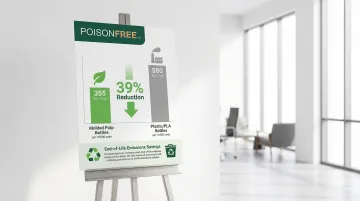
These bottles break down completely—100% biodegradable and compostable within 90 days in home compost conditions. Lifecycle assessments show molded pulp generates approximately 355 kg CO2e per 10,000 units compared to 580 kg CO2e for plastic/PLA, with most savings coming from end-of-life emissions.
The natural texture finish creates instant shelf appeal, visually communicating environmental commitment before customers even read the label.
| Attribute | Details |
|---|---|
| Material & Recyclability | Wood pulp and sugarcane pulp, fully biodegradable and home compostable within 90 days |
| Key Features | Water-resistant coating from natural materials, customizable shapes, lightweight, natural texture finish |
| Ideal For | Brands prioritizing biodegradability, natural/organic product lines, early adopters seeking differentiation |
Post-Consumer Recycled (PCR) PE Bottles by Berry Global
Berry Global's extensive line of personal care bottles made from post-consumer recycled polyethylene offers up to 100% PCR content—maintaining familiar bottle formats while diverting plastic waste from landfills.
Cost-effectiveness and compatibility with existing filling equipment make these bottles an accessible entry point for brands moving away from virgin plastic. HDPE (Resin Code #2) is widely accepted in municipal recycling programs.
Berry's PCR solutions deliver the durability personal care products need while cutting reliance on virgin fossil-fuel plastics.
| Attribute | Details |
|---|---|
| Material & Recyclability | Post-consumer recycled HDPE or LDPE, 25%-100% PCR content options, fully recyclable (resin codes #2 or #4) |
| Key Features | Various sizes and styles, compatible with standard filling equipment, comparable durability to virgin plastic |
| Ideal For | Brands transitioning from virgin plastic, budget-conscious startups, mass-market products, established brands improving sustainability |
Ocean-Bound Plastic Bottles by Prevented Ocean Plastic
Ocean-bound plastic refers to plastic waste collected within 50km of coastlines in areas lacking effective waste management—plastic "at risk" of entering oceans. This initiative creates dual benefits: preventing ocean pollution while providing livelihoods to coastal communities.
Certification programs ensure traceability and social responsibility. Collection sites must be transparently listed with geo-tags and photographic evidence.
For brands, this creates powerful storytelling backed by verified impact. Consumers increasingly want products that deliver authentic social and environmental benefits—not just claims.
| Attribute | Details |
|---|---|
| Material & Recyclability | Certified ocean-bound HDPE or PET, fully recyclable, traceable supply chain with blockchain verification |
| Key Features | Social impact certification, custom sizes available, comparable performance to standard recycled plastic |
| Ideal For | Mission-driven brands, companies with ocean conservation commitments, brands seeking authentic sustainability stories |
Refillable Aluminum Bottles by Plaine Products
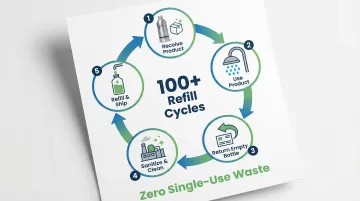
Plaine Products operates a closed-loop refill system where customers return empty aluminum bottles for sanitization and refilling—creating a true circular economy that eliminates single-use packaging entirely.
The system works simply: customers receive products in aluminum bottles, switch the pump to a new refill bottle when empty, and return the empty container using a prepaid label. Aluminum's durability allows bottles to be cleaned, sterilized, and reused 100+ times. This model builds customer loyalty through subscription integration and dramatically reduces overall material consumption.
| Attribute | Details |
|---|---|
| Material & Recyclability | Reusable aluminum bottles designed for 100+ refill cycles, fully recyclable at end of life |
| Key Features | Return shipping program, industrial sanitization process, pump dispensers included, subscription model integration |
| Ideal For | Direct-to-consumer brands, subscription services, brands with loyal customer bases, companies able to manage reverse logistics |
Glass Bottles with Sustainable Closures by Vetropack
Vetropack's premium glass bottles contain up to 90% recycled content. They pair with eco-friendly closures including bamboo, recycled plastic, or aluminum caps.
Glass is completely inert—no chemicals leach into formulations. This matters especially for toxin-free shampoos where purity is paramount. The EU achieved an 80.8% collection rate for glass packaging in 2023, proving mature recycling systems exist.
Glass recycles infinitely without quality loss. Recycling one bottle saves enough energy to power a computer for 25 minutes.
| Attribute | Details |
|---|---|
| Material & Recyclability | Recycled glass content up to 90%, infinitely recyclable without quality loss, various closure material options |
| Key Features | Frosted or clear finishes, custom embossing, excellent barrier properties, heavy-duty for premium positioning |
| Ideal For | Luxury brands, salon-quality products, brands emphasizing purity and non-toxicity, products with longer shelf life |
Bamboo Bottles by The Bamboo Company
Bamboo grows to maturity in just 3-5 years—far faster than traditional timber—making it a genuinely renewable resource for packaging applications. These bottles feature bamboo exterior shells with food-grade inner liners.
Natural antibacterial properties of bamboo provide additional product protection benefits. The unique aesthetic appeal with natural grain patterns immediately communicates environmental values. At end of life, the bamboo outer shell is biodegradable, while the liner recyclability varies by supplier.
| Attribute | Details |
|---|---|
| Material & Recyclability | Sustainably harvested bamboo with food-grade liner, biodegradable outer shell, liner varies by supplier |
| Key Features | Natural grain patterns, lightweight, various sizes, leak-proof inner containers |
| Ideal For | Natural/organic brands, eco-conscious consumers, brands emphasizing renewable materials, Asian-inspired aesthetics |
Water-Soluble Pouches by MonoSol (Kuraray)
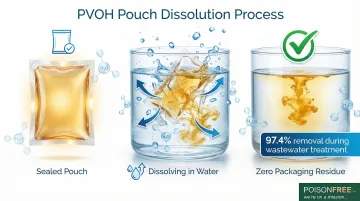
MonoSol's innovative polyvinyl alcohol (PVOH) film technology creates pouches that dissolve completely in water, releasing pre-measured shampoo doses and leaving zero packaging waste.
Studies confirm that specific PVOH grades biodegrade extensively during wastewater treatment, with average 97.4% removal. Aquatic toxicity studies show low ecotoxicity. This format eliminates packaging waste entirely, provides precise dosing that reduces product waste, and offers travel-friendly convenience with a novel consumer experience.
| Attribute | Details |
|---|---|
| Material & Recyclability | Polyvinyl alcohol (PVOH) film that dissolves in water, biodegrades in wastewater treatment, no packaging residue |
| Key Features | Single-use portions, customizable sizes, compatible with concentrated formulas, dissolvable in hot or cold water |
| Ideal For | Travel products, hotel amenities, subscription boxes, concentrated shampoo formulas, brands targeting convenience |
Bioplastic Bottles by BioPak (PLA from Corn)
Polylactic acid (PLA) bottles come from fermented plant sugars—typically corn or sugarcane. They offer a plant-based alternative to petroleum plastics with similar clarity to conventional PET.
PLA uses renewable resources and cuts production carbon footprint. The catch? It needs industrial composting facilities to break down properly. It won't biodegrade in oceans or home compost bins.
Infrastructure availability varies significantly by region, so verify your target markets have access before committing.
| Attribute | Details |
|---|---|
| Material & Recyclability | PLA from non-GMO corn or sugarcane, industrially compostable (requires commercial facility), carbon-neutral production |
| Key Features | Similar clarity to PET plastic, various sizes, printable surfaces, requires specialized composting infrastructure |
| Ideal For | Brands with access to industrial composting, plant-based product lines, markets with composting infrastructure |
Sugarcane Plastic Bottles by Braskem (Green PE)
Braskem's bio-based polyethylene comes from sugarcane ethanol but is chemically identical to conventional PE. This means it's fully recyclable in existing PE recycling streams without requiring new infrastructure—a true drop-in replacement (compatible with current systems).
Sugarcane absorbs CO2 during growth, making production carbon-negative. This material maintains the same durability and performance while using renewable feedstock. It's certified under the I'm Green™ program, providing third-party verification of bio-based content.
| Attribute | Details |
|---|---|
| Material & Recyclability | Bio-based HDPE from sugarcane, 100% recyclable in standard PE recycling streams, carbon-negative production |
| Key Features | Drop-in replacement for conventional PE, same durability and performance, I'm Green™ certified |
| Ideal For | Brands seeking renewable materials without changing supply chain, mass-market products, companies prioritizing carbon footprint reduction |
Paper-Based Bottles by Paboco (Paper Bottle Community)
Paboco has begun full-scale production of fiber-based bottles developed in collaboration with major brands including Coca-Cola, L'Oréal, and Procter & Gamble.
The "Next Gen Paper Bottle" consists of approximately 85% FSC-certified paper with a 15% HDPE barrier to hold liquids. The bottle is designed to be recyclable in paper packaging streams. While current versions include a thin polymer barrier, the technology roadmap aims for eventual elimination of this barrier for 100% paper recyclability.
| Attribute | Details |
|---|---|
| Material & Recyclability | FSC-certified paper exterior, current versions have thin polymer barrier (working toward elimination), paper-recyclable goal |
| Key Features | Lightweight, customizable printing, various sizes in development, strong brand differentiation |
| Ideal For | Early adopter brands, companies prioritizing innovation, brands willing to educate consumers on emerging technology |
Silicone Squeeze Bottles by Stasher
Food-grade platinum silicone reusable bottles eliminate single-use packaging entirely through a consumer ownership model. These bottles last for years with proper care, offering exceptional durability.
The material is non-toxic with no BPA, phthalates, or leaching concerns. Bottles are dishwasher and microwave safe, and temperature resistant from -40°F to 400°F. At end of life, silicone can be recycled through specialized programs, though infrastructure is less widespread than for aluminum or glass.
| Attribute | Details |
|---|---|
| Material & Recyclability | 100% pure platinum silicone, reusable for years, recyclable through specialized programs at end of life |
| Key Features | Leak-proof design, flexible squeeze bottles, various sizes, temperature resistant (-40°F to 400°F) |
| Ideal For | Refill station models, zero-waste stores, direct-to-consumer brands with refill programs, travel products |
How We Chose the Best Sustainable Packaging Solutions
Brands commonly make critical mistakes when selecting sustainable packaging. The most frequent? Choosing materials based solely on marketing claims without verifying certifications, selecting options incompatible with existing formulations or filling equipment, and ignoring end-of-life infrastructure availability in target markets.
We evaluated each packaging solution against five key criteria:
- FSC, Cradle to Cradle, and How2Recycle certifications that provide verified environmental claims
- Compatibility with various shampoo formulations including sulfate-free, oil-based, and concentrated formulas
- Supplier transparency with clear supply chain documentation and manufacturing process details
- Scalability from small batches (500-1,000 units) to mass production runs (50,000+ units)
- End-of-life infrastructure availability for recycling or composting in target markets
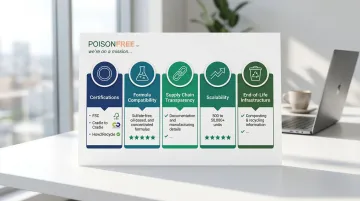
When applying these criteria to your brand, match your packaging choice with your brand values, target market infrastructure, and budget constraints. Always ensure the option you select meets product protection and shelf life requirements.
A biodegradable option means nothing if your market lacks composting facilities, while premium glass may justify higher retail prices for luxury positioning.
Conclusion
Sustainable shampoo packaging has evolved beyond greenwashing to offer legitimate, high-performance alternatives that protect products while reducing environmental impact.
From infinitely recyclable aluminum and glass to emerging fiber-based and water-soluble technologies, brands now have viable options across every price point and positioning strategy.
Evaluate options based on your specific needs:
- Budget and minimum order quantities
- Target market infrastructure (recycling/composting access)
- Brand positioning and customer expectations
- Realistic end-of-life outcomes in your customers' communities
Don't assume one-size-fits-all. The best packaging choice depends on where your products will actually end up.
If you're launching a sustainable shampoo line, finding a manufacturer who understands both clean formulations and accessible production runs matters. Poison-Free Private Label's 500-unit MOQ makes it possible to test sustainable packaging options without the typical $50,000+ investment required by larger manufacturers. This allows emerging brands to validate their eco-conscious positioning before scaling production.
Frequently Asked Questions
Is sustainable packaging more expensive than traditional plastic for shampoo bottles?
PCR plastic is cost-competitive with virgin plastic, while premium options like glass or aluminum cost 20-40% more upfront. However, sustainable packaging enhances brand value and can justify higher retail prices, with lower lifecycle costs when factoring in consumer loyalty and regulatory compliance.
What's the difference between recyclable, biodegradable, and compostable shampoo packaging?
Recyclable materials can be processed into new products through municipal programs. Biodegradable materials break down naturally (months to decades). Compostable materials break down into organic matter within 90-180 days in industrial facilities under specific conditions.
What are typical minimum order quantities for sustainable shampoo packaging?
MOQs range from 500-1,000 units for specialty manufacturers to 10,000-50,000+ units for large-scale suppliers. Custom options require higher minimums than stock designs, though some co-manufacturers offer lower MOQs by pooling orders.
Will sustainable packaging protect my shampoo formula as effectively as plastic?
Yes. Aluminum and glass offer excellent protection from light, oxygen, and moisture that degrade formulations. Molded pulp uses biodegradable coatings for water resistance. Match packaging to your formula—oil-based products need different barriers than water-based.
How do I communicate my sustainable packaging choice to customers effectively?
Use clear on-pack labeling with recycling instructions, include certification logos (FSC, How2Recycle), and tell your story on your website. Explain specifically what makes your packaging sustainable rather than using generic "eco-friendly" claims—specificity builds credibility.
Can I switch to sustainable packaging if I'm a small brand with limited budget?
Yes. Accessible options include PCR plastic bottles (cost-competitive with virgin plastic) and stock bamboo containers. Starting with 500-1,000 units from entrepreneur-friendly manufacturers allows market testing without massive investment, while sustainable packaging can justify premium pricing.