Introduction: The Hidden Engine Behind Successful Skincare Brands
Many successful skincare brands don't manufacture their own products. Instead, they leverage private label partnerships to focus resources on brand building and customer relationships—the activities that drive revenue.
Entrepreneurs face overwhelming barriers when launching skincare brands. Custom formulation requires $100,000-$300,000 in startup capital, 12-24 months of development time, and expertise in chemistry, regulatory compliance, and manufacturing processes.
According to McKinsey's beauty industry analysis, the global beauty market reached $446 billion in 2023, yet 80% of new beauty products fail due to high entry barriers and execution challenges.
Private label skincare eliminates these obstacles. With pre-formulated products, FDA cGMP compliant manufacturing, and minimum orders as low as 500 units, entrepreneurs can launch professional-grade skincare brands in weeks instead of years.
This approach lets founders focus their limited capital on marketing, storytelling, and customer acquisition rather than chemistry and compliance.
TLDR:
- Launch time drops from 12-24 months to 4-8 weeks with pre-formulated products
- Low MOQs reduce startup costs from $100,000-$300,000 to $20,000-$50,000
- Clean beauty demand drives 14.8% annual market growth through 2030
- FDA cGMP compliant manufacturing provides instant regulatory credibility
- Allocate capital to marketing and brand building instead of chemistry and compliance
What Is Private Label Skincare and Why It Matters
Private label skincare means pre-formulated products manufactured by a specialized company and sold under your brand name. You gain access to professional-grade formulations without developing chemistry from scratch or investing in manufacturing infrastructure.
You also avoid navigating complex regulatory requirements independently.
The model differs from contract manufacturing (where you own custom formulas) and full custom formulation (where you develop proprietary products). Private label offers the fastest, lowest-risk entry point into the skincare market.
Understanding the Business Model
The private label division of labor is strategically simple:
| Manufacturer Handles | You Control |
|---|---|
| Formulation development and testing | Brand identity and positioning |
| Regulatory compliance and safety documentation | Packaging design and labeling |
| Production and quality control | Marketing and customer acquisition |
| FDA cGMP adherence | Pricing strategy and distribution |
The separation allows you to focus entirely on revenue-generating activities. While your manufacturer ensures product safety and consistency, you build brand loyalty and drive sales—the work that differentiates successful brands.
The Clean Beauty Advantage
Understanding the business model matters especially now, as consumer demand for toxin-free formulations reshapes the industry.
The market data is compelling:
- Global clean beauty market reached $8.25 billion in 2023, projected to hit $21.29 billion by 2030 (14.8% annual growth)
- 68% of consumers actively seek clean ingredients
- 40.2% prioritize natural ingredients above all other factors
- Paraben-free products grow 80% faster than conventional alternatives
Partnering with manufacturers specializing in clean formulations gives your brand immediate credibility. You bypass years of reformulation work and enter the market with formulations already aligned with consumer values.
The Market Transformation Power of Private Label
Speed as a Competitive Advantage
Private label reduces time-to-market from 12-24 months to just 4-8 weeks. In an industry where trends shift rapidly, this speed lets you capture opportunities before they disappear.
Custom formulation requires extensive R&D iterations, stability testing (1-3 months minimum), safety assessments, and regulatory documentation.
By the time your custom product launches, the trend that inspired it may have already peaked.
Private label lets you capitalize on trends while they're hot. Launch seasonal products, test limited editions, and respond to competitor moves in weeks instead of quarters. In a market growing at 5% annually through 2030, agility directly drives market capture.
Lower Financial Barriers, Higher Market Access
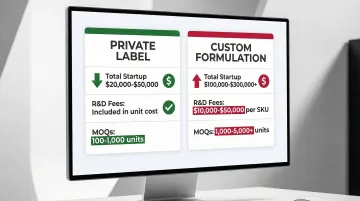
The cost difference between private label and custom formulation is dramatic:
| Cost Component | Private Label | Custom Formulation |
|---|---|---|
| Total Startup Investment | $20,000-$50,000 | $100,000-$300,000+ |
| R&D/Formulation Fees | Included in unit cost | $10,000-$50,000 per SKU |
| Typical MOQs | 100-1,000 units | 1,000-5,000+ units |
Source: Metro Private Label Cost Analysis
Private label eliminates massive upfront R&D costs, making professional skincare accessible to entrepreneurs with limited capital.
Instead of investing $50,000 developing a single custom moisturizer, you can launch a complete 3-5 product line for the same investment.
Scalability That Grows With Your Vision
Private label manufacturers offer flexible production volumes, allowing you to start small and scale without infrastructure investments.
Some manufacturers, like Poison-Free Private Label, offer MOQs as low as 500 units—dramatically lower than the industry standard of 5,000-10,000 units.
This flexibility transforms cash flow management. Instead of tying up $50,000 in inventory for a single product, you can test multiple formulations, packaging concepts, and target segments with smaller batches—validating demand before committing significant capital.
As your brand grows, production scales seamlessly. Manufacturers maintain the same formulations and quality standards whether you order 500 units or 50,000 units, eliminating the operational complexity of transitioning between production facilities.
Market Positioning Without Manufacturing Complexity
With manufacturing handled, you can focus entirely on brand differentiation—the real driver of market success. While competitors struggle with formulation challenges and compliance headaches, you invest in:
- Brand storytelling and positioning that resonates with your target audience
- Content and visual identity that stands out in crowded markets
- Customer acquisition and retention strategies that drive growth
- Influencer partnerships and community building that amplify reach
- Market research and feedback loops that refine your offering
These activities directly generate revenue. Manufacturing expertise doesn't. 66% of consumers now say private label products are as good as or better than national brands, proving that formulation alone doesn't create brand preference—positioning and experience do.
Built-in Quality and Compliance
Partnering with FDA cGMP compliant manufacturers provides immediate regulatory credibility.
The Modernization of Cosmetics Regulation Act of 2022 (MoCRA) introduced mandatory facility registration, product listing, and safety substantiation requirements that overwhelm new entrepreneurs.
Established manufacturers already maintain ISO 22716 certification—the international standard for cosmetic Good Manufacturing Practices.
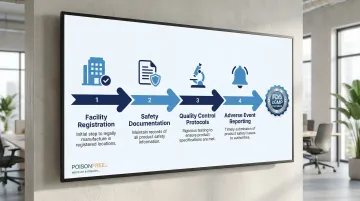
They handle critical compliance tasks including:
- Facility registration and product listing
- Safety documentation and substantiation
- Quality control protocols and testing
- Adverse event reporting and management
You gain instant compliance credibility without hiring regulatory consultants or building internal expertise. Your manufacturing partner's certifications become your brand's quality assurance foundation.
Strategic Advantages That Unlock Market Potential
Professional Formulations Without the Learning Curve
Access to 100+ pre-tested formulations developed over decades gives new brands the same quality foundation as established competitors. These formulations have undergone stability testing, safety assessments, and real-world validation across thousands of customers.
Most entrepreneurs should source formulation expertise rather than self-develop. A cosmetic chemist with 30 years of experience has solved problems you haven't yet encountered. Their formulations incorporate learnings from regulatory changes, ingredient innovations, and consumer feedback accumulated over decades.
Consider Poison-Free Private Label, which has formulated over 100 toxin-free products since starting 30 years ago. Their founder's philosophy—"If I won't use it, I won't make it and sell it to anyone else"—ensures every formulation meets rigorous personal safety standards.
Each formula reaches customers only after passing internal safety benchmarks built on three decades of experience.
Fast Turnaround Enables Market Agility
Quick production cycles allow brands to launch seasonal products, limited editions, and trend-responsive items that custom manufacturing timelines make impossible.
Manufacturers with substantial raw materials inventory can ship orders within a week once materials are in house. Speed creates competitive advantages:
- Test new product concepts with minimal risk
- Launch holiday collections timed to shopping seasons
- Respond to competitor moves before market share shifts
- Capitalize on viral trends and social media moments
- Iterate based on customer feedback in real-time
Compare this to custom manufacturing's inflexibility. A 12-week production cycle means decisions made in July launch in October—missing summer trends entirely.
Risk Mitigation Through Market Testing
Fast turnaround also reduces financial exposure. Low MOQs enable brands to test multiple products, packaging concepts, and market segments without over-investing.
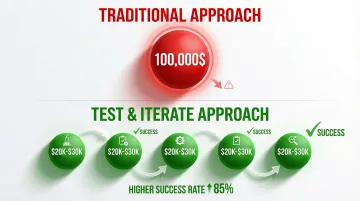
The "test and iterate" approach is how successful brands find product-market fit. Instead of betting $100,000 on a single product line, strategic testing allows you to:
- Launch 3-5 products with $20,000-$30,000 total investment
- Test different price points across customer segments
- Experiment with packaging designs and messaging
- Validate demand before scaling production
- Pivot quickly when products underperform
With 500-unit minimums priced as if you bought 10,000, you gain volume pricing benefits without volume risk. If a product doesn't resonate, your loss is measured in thousands, not hundreds of thousands.
Cost Structure That Maximizes Profit Margins
Private label pricing structures improve margins for small brands by eliminating volume penalties that punish startups. When manufacturers price 500 units at the same per-unit cost as 10,000 units, you compete on equal footing with larger competitors.
The pricing advantage compounds as you scale. Revenue generated from initial product launches funds expansion into new SKUs, marketing investments, and eventually custom formulations for hero products—all without external funding.
Focus Your Resources on Revenue-Generating Activities
Manufacturing partnerships free up capital and attention. Without production overhead, you can invest in activities that directly drive sales.
Marketing and content creation:
- Social media strategy and community management
- Educational content and brand storytelling
- Email marketing and customer retention campaigns
Customer acquisition:
- Influencer partnerships and affiliate programs
- Paid advertising optimization
- Strategic retail partnerships
Customer experience:
- Responsive customer service
- Personalized recommendations
- Loyalty programs and repeat purchase incentives
These investments generate immediate ROI. Manufacturing expertise doesn't. It's a cost center that private label partnerships eliminate.
How to Leverage Private Label for Maximum Impact
Choosing the Right Manufacturing Partner
Your manufacturer becomes a strategic partner in your brand's success. Evaluate based on these criteria:
Formulation quality and ingredient philosophy:
- Do their formulations align with your brand values (clean, organic, clinical)?
- What ingredients are explicitly excluded from their formulas?
- Can you access detailed ingredient lists and sourcing information?
Compliance and certifications:
- FDA cGMP compliance status
- ISO 22716 certification
- MoCRA registration and safety substantiation protocols
Operational flexibility:
- Minimum order quantities (500 units vs. 5,000+)
- Production turnaround times
- Inventory management for raw materials
Communication and responsiveness:
- How quickly do they respond to inquiries?
- Do they provide dedicated account management?
- Can they support your growth trajectory?
Your values and your manufacturer's must align completely. If your brand promises toxin-free formulations, your manufacturer must share that non-negotiable commitment.
Authentic brand storytelling requires authentic manufacturing partnerships.
Building Your Unique Brand Identity
Once you've selected formulations that work, brand identity transforms them into products customers love. Differentiate in these key areas:
Packaging design: 35% of beauty shoppers value recyclable packaging, and 31% prioritize minimal packaging. Your design choices signal brand values before customers try the product.
Brand story and positioning: Define your unique perspective. Are you democratizing luxury skincare? Serving an underserved demographic? Solving a specific skin concern traditional brands ignore?
Target customer definition: Successful brands serve specific audiences deeply rather than broad audiences superficially. Define demographics, lifestyle characteristics, pain points, and aspirations precisely.
Visual identity: Colors, typography, imagery, and tone of voice create instant brand recognition. Invest in professional design that reflects your positioning and resonates with your target customer.
Strategic Product Selection and Line Development
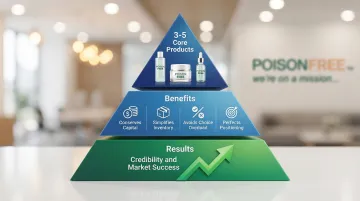
Launch lean, then expand. Start with 3-5 core products that solve specific customer problems rather than launching a full line.
This focused approach:
- Conserves capital for marketing investments
- Simplifies inventory management
- Avoids overwhelming customers with choices
- Allows deeper focus on perfecting each product's positioning
When selecting products from your manufacturer's catalog, prioritize:
- Alignment with your target customer's primary pain points
- Complementary usage (cleanser + moisturizer + serum)
- Price point consistency across the line
- Unique positioning opportunities in your market segment
A cohesive 3-5 product line builds credibility faster than a scattered 10-product catalog with no clear focus.
Creating Authentic Brand Narratives
Communicate your product story authentically even when using private label formulations. Share what matters:
Why you selected these formulations: "We spent six months evaluating manufacturers before finding a partner whose toxin-free philosophy matched our non-negotiable safety standards."
Your quality standards: "Our clean beauty criteria exclude parabens, sulfates, phthalates, and synthetic fragrances. We test every batch before it ships."
Your brand mission: "We're making clinical-grade skincare accessible to women who've been priced out of premium products without compromising ingredient quality."
Most successful brands use private label manufacturing without disclosing it. What matters is being genuine about what you stand for, why you started your brand, and what problems you're solving for customers.
75% of beauty shoppers research a brand's ethics and sourcing before purchasing. Authenticity is a competitive advantage. Transparency about values builds trust.
Planning for Growth and Expansion
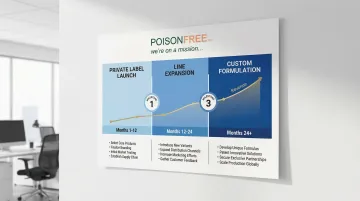
The typical progression path:
Phase 1: Private label launch (Months 1-12)
- Launch 3-5 core products
- Establish market presence and generate revenue
- Build customer base and gather feedback
- Validate product-market fit
Phase 2: Line expansion (Months 12-24)
- Add complementary products based on customer requests
- Test new categories with low MOQ flexibility
- Expand into adjacent market segments
- Optimize best-sellers and discontinue underperformers
Phase 3: Custom formulation for hero products (Months 24+)
- Develop proprietary formulations for top-selling products
- Create unique positioning through exclusive ingredients
- Protect market position with differentiated formulas
- Maintain private label for supporting products
This progression minimizes risk while maximizing growth potential. You prove demand before investing in custom R&D, using private label revenue to fund future innovation.
Overcoming Common Concerns and Misconceptions
"Won't My Products Be Generic?"
Private label doesn't mean identical products to competitors. Branding, packaging, positioning, and customer experience create genuine differentiation. Consider how successful brands use the same manufacturing partners yet occupy completely different market positions:
- Brand A targets budget-conscious millennials with minimalist packaging and accessible pricing
- Brand B serves luxury consumers with premium packaging and spa-like experience
- Brand C focuses on specific skin concerns (acne, rosacea) with clinical positioning
Same formulations. Completely different brands. Different customers. Different price points. Different market success.
Differentiation comes from understanding your customer deeply and serving their specific needs better than generic competitors—not from proprietary chemistry.
"How Can I Ensure Quality?"
Established manufacturers often maintain higher quality standards than startups could achieve independently. Look for:
Certifications:
- FDA cGMP compliance
- ISO 22716 certification
- Third-party testing credentials
Testing protocols:
- Stability testing for shelf life
- Microbial testing for safety
- Safety verification records
Ingredient sourcing:
- Supplier qualification requirements
- Ingredient purity standards
- Traceability systems
Manufacturers with 20-30 years of experience have refined quality protocols through thousands of production runs. They've solved problems you haven't encountered yet.
Request documentation. Ask detailed questions. Visit facilities when possible.
Reputable manufacturers welcome scrutiny—it demonstrates their commitment to quality.
"What About Brand Authenticity?"
Your brand is authentic when your values, customer service, and brand promise are genuine. Where you manufacture doesn't define that.
Authenticity means:
- Delivering on your brand promises consistently
- Being transparent about what you stand for
- Serving customers with genuine care and responsiveness
- Building community around shared values
- Communicating honestly without exaggeration
A manufacturing partnership doesn't compromise these elements. Most successful brands—including prestige names—use contract manufacturers.
What matters is whether you deliver value to customers and build trust through consistent execution.
Frequently Asked Questions
Is private label skin care profitable?
Yes, private label offers strong profit margins due to lower upfront costs and reduced risk. Many brands achieve profitability within their first year by minimizing R&D expenses and focusing investment on marketing and customer acquisition.
What are the advantages of private label products?
Private label offers faster time-to-market (4-8 weeks vs. 12-24 months for custom), lower startup costs ($20,000-$50,000 vs. $100,000-$300,000+), and built-in regulatory compliance. You can focus resources on brand building while accessing professional formulations.
How do I choose between different private label manufacturers?
Evaluate formulation quality, minimum order requirements (some like Poison-Free Private Label start at 500 units vs. 5,000+), FDA cGMP certifications, and ingredient philosophy (toxin-free vs. conventional). Request samples, documentation, and references before committing.
Can I customize private label products?
You can customize packaging and labels, with some manufacturers offering minor adjustments like fragrance options or ingredient additions. Full custom formulation typically becomes available as you scale and demonstrate consistent volume.
What's the minimum investment needed to start a private label skincare line?
With low MOQ manufacturers (500 units), brands can launch with $20,000-$30,000 including product, packaging, and branding. This compares to $100,000-$300,000+ for custom formulation, making professional skincare accessible to entrepreneurs with limited capital.
How long does it take to launch a private label skincare brand?
Brands can launch in 4-8 weeks with private label compared to 12-24 months for custom formulation. This speed lets you generate revenue quickly, test market demand, and iterate based on customer feedback.
Private label skincare transforms market potential by eliminating the barriers that prevent most entrepreneurs from succeeding. Speed, cost-efficiency, regulatory compliance, and focus—these advantages compound to create brands that compete effectively against established players.
The global skincare market will reach $590 billion by 2030, with clean beauty growing at nearly 15% annually. The opportunity is massive.
Private label partnerships provide the fastest, lowest-risk path to capturing your share of this growth.
Success doesn't require proprietary chemistry. It requires understanding your customer, building authentic brand identity, and executing consistently on your brand promise. Private label manufacturing handles the complexity so you can focus on what actually drives revenue: connecting with customers and building loyalty.
Your next move: identify a manufacturing partner whose values align with your brand vision, select 3-5 products that solve real customer problems, and launch. The market rewards speed and execution. Private label gives you both.