Introduction: Understanding the Contract Manufacturing Landscape
Choosing the wrong contract manufacturer can cost businesses thousands in wasted inventory, missed deadlines, and damaged brand reputation. A single quality failure derails product launches. Production delays damage customer trust built over years.
Contract manufacturing offers significant advantages: no need for facilities, lower capital investment, and faster market entry. Yet the buyer-manufacturer relationship comes with unique challenges that catch many businesses off guard.
The U.S. personal care contract manufacturing market is projected to reach $24.18 billion in 2025, growing at 8.4% annually through 2033. This growth reflects increasing demand—but also highlights why understanding common pain points matters.
This guide examines the most common pain points buyers face when working with contract manufacturers and provides practical strategies to avoid or overcome them.
TLDR:
- Minimum order requirements trap capital and create inventory risk for new brands
- Verify FDA cGMP compliance, ISO certifications, and third-party testing protocols
- Communication breakdowns lead to missed deadlines and products that don't meet specifications
- Lead times range from weeks to months; delays cascade into lost sales and strained customer relationships
- Hidden costs include tooling fees, testing charges, deposits, and reformulation expenses
What is Contract Manufacturing and Why Buyers Choose It
Choosing the right manufacturing partner starts with understanding exactly what you're buying. Many entrepreneurs confuse two distinct models that serve very different business needs.
Defining the Models
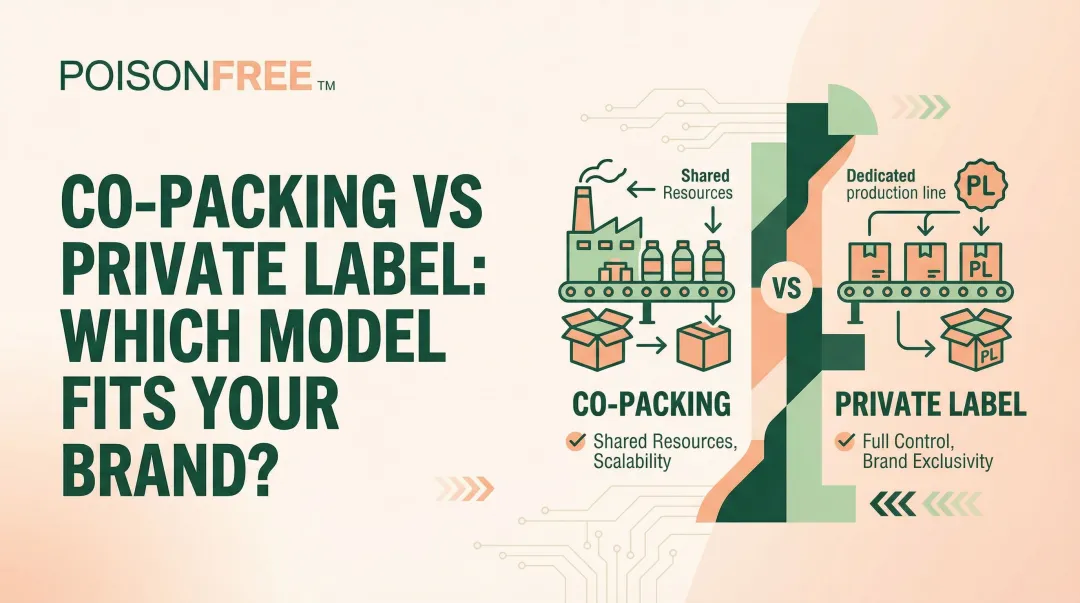
Contract Manufacturing (Custom/OEM): The manufacturer produces a unique product based on your specific formulation, ingredients, and performance requirements. You own the formula and control product differentiation.
Private Label: The manufacturer produces a pre-formulated product that multiple brands can purchase and sell under their own label. Manufacturers generally limit customization to packaging and branding.
Why Businesses Choose Contract Manufacturing
The global personal care contract manufacturing market is expected to grow from $24.18 billion in 2025 to $45.44 billion by 2033. Buyers choose contract manufacturing for these core advantages:
- Reduced overhead: Avoid capital investment in plants, equipment, and quality systems while focusing resources on marketing and distribution
- Formulation expertise: Access manufacturers' regulatory experience and established quality systems without building capabilities in-house
- Flexible scaling: Start with smaller production runs and expand as demand grows, no additional capacity investment needed
- Speed to market: Launch products faster by tapping into existing production capabilities and compliance frameworks
- Product differentiation: Create unique formulations that stand out from generic private label alternatives and support premium pricing
Pain Point 1: Minimum Order Quantities That Don't Match Business Reality
The MOQ Barrier
Many contract manufacturers set MOQs in the thousands or tens of thousands of units, creating a major barrier for small businesses and startups. Contract manufacturing typically demands higher volume commitments (10,000+ units) compared to private label options, which can start at much lower quantities.
Manufacturers set MOQs to recover setup costs, line changeovers, and raw material bulk purchases. Small-batch production often carries the highest unit cost because fixed costs spread over fewer units.
The Financial Impact
High MOQs create several financial challenges for emerging brands:
- Cash Flow Strain: Producing 10,000 units requires substantial upfront investment before validating market demand or proving product-market fit
- Inventory Risk: Large initial runs mean thousands of unsold units if the product doesn't perform as expected (particularly problematic for clean beauty products with shorter shelf lives)
- Budget Uncertainty: MOQs vary dramatically by product category and manufacturer size, making it difficult to plan accurately
Breaking Through the MOQ Wall
Finding the right manufacturing partner makes all the difference. Poison-Free Private Label offers MOQs starting at 500 units, allowing entrepreneurs to test products without massive capital investment and validate market demand before committing to larger runs.
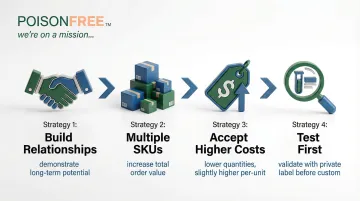
Negotiation strategies include:
- Build relationships and demonstrate your long-term partnership potential
- Commit to multiple SKUs to increase total order value
- Accept slightly higher per-unit costs for lower initial quantities
- Test demand with private label products before investing in custom formulations
Pain Point 2: Quality Control and Compliance Nightmares
The Visibility Problem
Buyers have limited visibility into manufacturing processes and must trust the manufacturer's quality systems. This "black box" creates significant risk when manufacturers don't maintain rigorous standards.
Common Quality Failures
Quality issues plague contract manufacturing relationships:
- Inconsistent batches with varying color, texture, or performance
- Contamination from inadequate cleaning procedures or raw material issues
- Incorrect formulations that don't match approved samples
- Substandard ingredients substituted without notification
- Products that fail stability or safety testing
These quality failures don't just frustrate buyers—they've prompted stricter regulatory oversight across the industry.
The Regulatory Landscape Has Changed
The Modernization of Cosmetics Regulation Act of 2022 (MoCRA) fundamentally altered compliance requirements for cosmetic manufacturers. The FDA now has mandatory recall authority and requires strict facility registration and Good Manufacturing Practices, closing gaps that previously allowed substandard operations to continue unchecked.
Key MoCRA requirements:
- Facility registration with FDA required, renewed every two years
- FDA can suspend registration for products posing serious health risks
- Brands must maintain safety substantiation records
- All marketed products and ingredients must be listed with FDA
Compliance Standards That Matter
Two certifications indicate a manufacturer meets rigorous quality standards:
ISO 22716
The international standard for cosmetic Good Manufacturing Practices, covering production, control, storage, and shipment. Widely accepted by regulators in the U.S., EU, Canada, and Japan.
NSF/ANSI 455-3
A U.S. consensus standard encompassing ISO 22716 requirements while adding specific regulatory and retailer best practices. Certification serves as a verification tool for regulators and consumers.
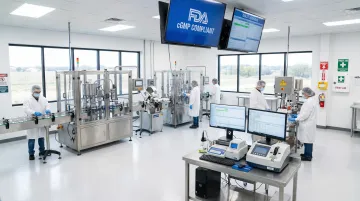
For example, Poison-Free Private Label maintains FDA cGMP compliance in their Northern Texas facility—a standard they've refined over 30 years of manufacturing toxin-free personal care products.
Consequences of Quality Failures
- Product recalls that damage brand reputation and customer trust
- Customer complaints and negative reviews that hurt sales
- Potential legal liability for injuries or adverse reactions
- Lost revenue from unsellable inventory
- Regulatory action including facility suspension
How to Verify Quality Standards
Verify certifications upfront: Request copies of FDA cGMP certification, ISO 22716, or NSF/ANSI 455-3 documentation before signing agreements.
Request samples and test independently: Conduct third-party testing on samples to verify quality before committing to full production runs.
Establish specifications in writing: Create detailed quality specifications covering physical, chemical, and microbiological parameters for both raw materials and finished goods.
Insist on pilot runs: A pilot run (typically 10% of the total first order) validates the process and identifies potential defects before full production.
Pain Point 3: Communication Breakdowns and Lack of Transparency
The Communication Crisis
Poor communication tops the list of contract manufacturing frustrations. Delayed responses, vague answers, and unreachable decision-makers can derail even the best product plans.
The Transparency Gap
Manufacturers often fail to proactively share critical information:
- Production updates and current batch status
- Potential delays or supply chain disruptions
- Quality deviations or issues discovered during manufacturing
- Changes to raw materials or processes
According to transparency research, 60% of consumers want brands to identify ingredient sources, yet brands often lack this data from their manufacturers.
Another 72% of consumers want brands to explain what ingredients do, creating pressure for detailed supply chain visibility.
Specific Communication Challenges
These transparency gaps stem from specific communication barriers:
- International manufacturers operating on different schedules create delays in critical communications
- Language barriers cause misunderstandings about specifications, requirements, or issues
- Unclear points of contact waste time when you need production, quality, or logistics answers
- Missing project management systems let updates fall through the cracks until issues become crises
How Communication Failures Cascade
Communication breakdowns create cascading problems:
- Misaligned expectations about product specifications or timelines
- Missed deadlines that impact launch dates and marketing campaigns
- Off-spec products discovered only upon delivery
- Emergency situations that could have been prevented with advance warning
Red Flags to Watch
Manufacturers who are difficult to reach during the sales process will likely be worse during production. If you struggle to get responses to pre-contract questions, expect the same during manufacturing.
Establishing Communication Protocols
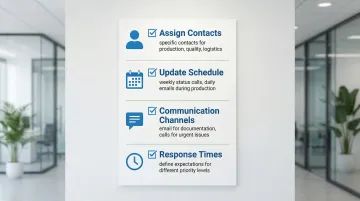
Set clear expectations upfront:
- Assign specific contacts for different issues (production, quality, logistics)
- Establish regular update schedules (weekly status calls, daily emails during production)
- Agree on communication channels (email for documentation, calls for urgent issues)
- Define response time expectations for different priority levels
Experienced manufacturers understand that proactive communication prevents problems and builds lasting partnerships.
Pain Point 4: Long Lead Times and Unpredictable Production Delays
Lead Time Reality Check
Lead times in contract manufacturing vary dramatically based on the manufacturing model:
- Private Label (Standard Stock): Total turnaround is approximately 4-8 weeks, including design approval (1-3 days) and production (7-10 days)
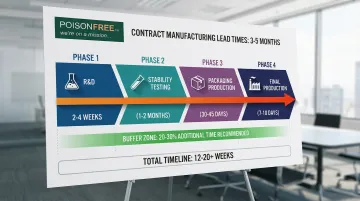
- Custom Contract Manufacturing (OEM): Total turnaround is approximately 3-5 months (12-20+ weeks), including R&D (2-4 weeks), stability testing (1-2 months), and packaging production (30-45 days)
Common Causes of Delays
Understanding what causes delays helps you plan more effectively:
- Raw material procurement: Sourcing ingredients typically takes 1-2 weeks, though imported materials or unique actives can take significantly longer due to customs or scarcity
- Packaging production: Custom packaging procurement often takes 2-3 weeks or longer for custom designs and molds
- Testing gates: Proper R&D requires testing gates that cannot be rushed—stability testing and pre-production readiness ensure product safety and performance
- Equipment issues: Breakdowns, maintenance, or capacity constraints can delay production unexpectedly
- Regulatory hold-ups: Compliance testing or documentation issues can pause production until resolved
Business Impact of Delays
Missing a launch window due to production delays can result in significant lost sales. A 2-week delay that causes you to miss the holiday season can devastate annual revenue projections.
Long lead times create additional challenges:
- Tie up capital in inventory for extended periods
- Reduce ability to react to market trends or competitive threats
- Strain customer relationships when promised delivery dates slip
- Create stockouts that drive customers to competitors
Mitigating Delay Risks
Protecting your launch schedule requires proactive planning:
- Build buffer time: Add 20-30% to manufacturer-provided timelines in your launch planning to account for inevitable delays
- Request realistic timelines: Push manufacturers to provide conservative estimates rather than best-case scenarios
- Ask about capacity and backup plans: Understand the manufacturer's current capacity utilization and what contingency plans exist for equipment failures or supply disruptions
- Work with proven partners: Manufacturers like Poison-Free Private Label, who ship orders within a week once materials are in house, demonstrate operational excellence and respect for your timeline pressures
Pain Point 5: Limited Customization and Flexibility
The Standardization vs. Customization Trade-off
Many contract manufacturers struggle with customization requests. They prefer working within existing capabilities and resist custom formulations, unique packaging, or special requirements. This "take it or leave it" approach blocks your ability to create differentiated products that stand out in competitive markets.
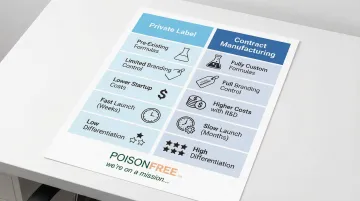
| Feature | Private Label | Contract Manufacturing |
|---|---|---|
| Formula | Pre-existing, standard formulas. No control over ingredients. | Fully custom. Full control over ingredients, texture, and fragrance. |
| Branding | Limited to label design and packaging graphics. | Full control over packaging type, materials, and custom molds. |
| Cost | Lower startup costs; no R&D fees. | Higher costs; includes R&D, stability testing, and higher MOQs. |
| Differentiation | Low; other brands may sell the exact same formula. | High; unique product builds strong brand equity and IP. |
| Launch Speed | Fast (Weeks). | Slow (Months). |
This comparison shows the trade-offs, but the real challenge lies in finding manufacturers who offer true flexibility within the contract model.
The Flexibility Problem
The typical scenario buyers face:
- Limited formula adjustments - Pre-set formulations with no room to modify ingredients, scents, or textures
- Rigid packaging options - Standard containers only, no custom molds or unique designs
- No ingredient substitutions - Can't swap ingredients even when you have allergen concerns or want cleaner formulations
- Fixed product attributes - Locked into specific colors, fragrances, or viscosities
This rigidity makes it nearly impossible to create products that command premium pricing or reflect your brand's unique identity.
Finding the Balance
Some standardization makes manufacturing efficient. However, you need partners willing to work with your specific requirements.
The sweet spot: manufacturers who maintain substantial raw material inventories and dedicate resources to custom work. This approach lets them adapt formulations to your brand without starting from scratch each time.
Vetting for Customization Capability
During manufacturer vetting, dig into their actual customization capabilities:
Recent track record:
- What custom projects have you completed in the past 6 months?
- Can I speak with clients who requested formula modifications?
Modification capabilities:
- How much can you adjust existing formulations? (ingredient swaps, fragrance changes, texture modifications)
- Do you develop new formulations in-house or outsource R&D?
Practical considerations:
- What's your typical timeline for custom formulation development?
- How do customization requests affect cost and minimum order quantities?
For example, a manufacturer specializing in toxin-free formulations might maintain inventory of 30% stock raw materials while dedicating 70% of their production to custom work. This model provides flexibility without forcing you to wait months for ingredient sourcing.
Pain Point 6: Hidden Costs and Unclear Fee Structures
Beyond the Unit Price
Initial quotes often don't reflect the total cost of contract manufacturing.
Setup fees, tooling costs, design fees, shipping, storage, and minimum order penalties add up quickly and can turn seemingly affordable products into money-losers.
Common Hidden Costs
Tooling and molds: Custom packaging requires custom molds ranging from thousands to hundreds of thousands of dollars depending on complexity.
Testing fees: Stability, safety, and microbial testing are separate line items. Complex formulas require more extensive testing.
Sample fees: Manufacturers often charge for samples. Some offer "sample offsets," where the sample fee is deducted from the first bulk order.
Reformulation fees: Changes to formulas after initial development incur additional charges.
Rush charges: Expedited production to meet tight deadlines comes with premium pricing.
Packaging changes: Changes to labels, containers, or packaging design after approval trigger additional fees.
Per-unit price increases: Smaller batches carry higher per-unit costs as fixed costs spread over fewer units.
Payment Structure Confusion
Typical payment structures for first-time clients include:
- 30% deposit via T/T (Telegraphic Transfer)
- Remaining balance due before shipment
- Established partners may negotiate "Open Account" terms, but this is rare for new relationships
These payment requirements create cash flow challenges for startups with limited working capital.
Understanding the full financial picture requires looking beyond payment terms to total cost of ownership.
Total Cost of Ownership (TCO)
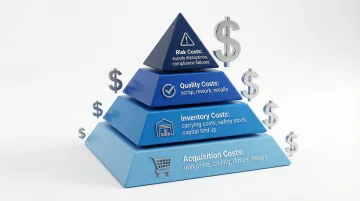
To understand true costs, use a TCO framework that includes:
- Acquisition Costs: Unit price, tooling, duties, and inbound freight
- Inventory Costs: Carrying costs for cycle stock and safety stock, plus cost of capital tied up in high MOQs
- Quality Costs: Cost of scrap, rework, and potential recalls
- Risk Costs: Financial impact of supply chain disruptions or compliance failures
Protecting Yourself from Cost Surprises
Request complete cost breakdowns in writing before committing to a manufacturer. The breakdown should include:
- Per-unit price at different volume tiers
- All setup and tooling fees
- Testing and certification costs
- Sample fees and offset policies
- Shipping and handling charges
- Payment terms and deposit requirements
- Fees for changes and revisions
How to Overcome These Pain Points: A Buyer's Action Plan
Start with Thorough Due Diligence
Vet multiple manufacturers before making a decision. Request client references and review certifications. Conduct facility visits or virtual tours to assess capabilities directly.
Verify FDA registration: Under MoCRA, manufacturers must register their facilities with the FDA. Request their FDA Establishment Identifier (FEI) number to confirm registration.
Check certifications: Look for ISO 22716 or NSF/ANSI 455-3 certification. These demonstrate commitment to quality and safety standards.
Review audit reports: Request recent third-party audit reports to understand their quality control systems.
Establish Clear Expectations in Writing
Create detailed specifications covering:
- Physical, chemical, and microbiological parameters
- Quality standards and acceptance criteria
- Timelines with milestone dates
- Communication protocols and designated contacts
- Complete pricing agreements including all potential fees
Develop a Quality Agreement that defines:
- Responsibilities for FDA listing and compliance
- Change control processes for any formula or process modifications
- Specifications for raw materials and finished goods
- Procedures for handling deviations or quality issues
Build Strategic Relationships
View your manufacturer as a long-term partner, not just a vendor. Communicate openly about your business goals, growth plans, and challenges.
Demonstrate that you're a reliable customer by:
- Meeting payment deadlines consistently
- Providing clear specifications and requirements
- Responding promptly to manufacturer questions
- Being realistic about timelines and capabilities
Start Small and Test
When possible, begin with smaller orders to validate quality and partnership fit before committing to large production runs. Insist on pilot runs even if the manufacturer claims they're unnecessary. A pilot run (10% of your first order) identifies potential defects before full production.
Match Manufacturers to Your Business Stage
Once you've validated quality through testing, focus on long-term fit. Consider manufacturers who specialize in your product category and have experience working with businesses at your stage. Startups need different support than established brands.
Look for partners who address common pain points:
- Low MOQs (500-1,000 units) for market testing
- Transparent pricing with no hidden fees
- Fast turnaround (orders shipped within 1-2 weeks)
- FDA cGMP compliance and safety standards
- Clean formulations meeting your brand values
For example, some manufacturers offer entrepreneur-friendly terms like consistent pricing regardless of order size, or specialize in toxin-free formulations backed by decades of experience. The right partner aligns with both your production needs and your brand's core values.
Frequently Asked Questions
What is the difference between private label and contract manufacturing?
Private label uses existing formulations with your branding, while contract manufacturing creates custom formulations based on your specifications. Private label is faster and cheaper but less unique; contract manufacturing offers differentiation but requires more time and investment.
What should I ask a contract manufacturer before signing an agreement?
Ask about MOQs, certifications (FDA cGMP, ISO 22716, NSF/ANSI 455-3), lead times, and complete cost structure. Request client references, details on quality control processes, scalability capacity, and communication protocols during production.
How do I verify a contract manufacturer's quality and compliance?
Verify certifications and FDA Establishment Identifier (FEI) number directly. Conduct facility audits or review recent third-party audit reports. Request samples for independent testing and check references from current clients about quality consistency.
What are red flags that indicate a contract manufacturer may not be reliable?
Red flags include reluctance to provide documentation, poor communication, no verifiable client references, and pricing that seems too good to be true. Also watch for missing certifications, vague answers about processes, or refusal to allow facility visits.
How can small businesses find contract manufacturers with reasonable MOQs?
Target manufacturers that market to startups with low MOQs—companies like Poison-Free Private Label offer 500-unit minimums at high-volume pricing. Domestic manufacturers often provide more flexibility than overseas factories. Start with private label to test demand before investing in custom formulations.