Introduction
Private label products yield 35% profit margins compared to 26% for national brands, according to recent industry data. With U.S. private label sales reaching a record $282.8 billion in 2025—growing at 3.3% while national brands grew just 1.2%—there's never been a better time to enter this market.
The challenge? Most entrepreneurs hit walls with $10,000 minimum orders, months-long lead times, and formulations filled with questionable ingredients that savvy consumers increasingly avoid.
This guide identifies 40+ high-margin product opportunities across five fast-growing categories:
- Beauty and personal care (clean formulations)
- Wellness and supplements
- Pet care products
- Home goods and lifestyle
- Fitness and sports nutrition
Each category is organized by margin potential and market demand, with insights on manufacturing requirements and startup considerations.
Key Takeaways
- Private label products deliver 35% average profit margins vs. 26% for national brands
- Beauty products offer 40-60% margins, health supplements 45-65%, pet products 40-55%
- Target low-competition niches with repeat purchase potential and strong branding opportunities
- Startup costs range from $500-$5,000 depending on category and MOQs
- Focus on clean, toxin-free formulations to tap into premium consumer demand
What Makes a Private Label Product High-Margin?
High-margin private label products share three critical characteristics: low manufacturing costs relative to perceived value, repeat purchase behavior that builds customer lifetime value, and the ability to command premium pricing through branding.
The key is finding categories where consumers prioritize quality over price and where emotional purchase drivers support premium positioning.
The Margin Math: Manufacturing a beauty serum might cost $5-$8 per unit but retail for $30-$80, delivering 300%+ markups. In pet products, private label margins range from 30-50% compared to 20-35% for national brands.
Market Indicators of High-Margin Potential:
- Growing demand trends with 3%+ annual growth
- Underserved niches where national brands haven't dominated
- Emotional purchase drivers like beauty, pet care, or wellness
- Consumer demand for clean, toxin-free alternatives
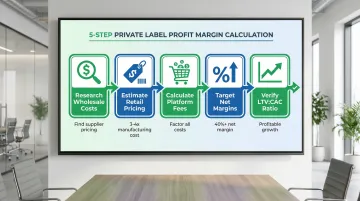
Calculating Your Potential Margins:
- Research typical wholesale costs from manufacturers (request quotes from 3-5 suppliers for comparison)
- Estimate retail pricing based on competitor analysis (aim for 3-4x manufacturing cost)
- Include platform fees (Amazon: 15%, Shopify: 2-3%) and shipping costs
- Target 40%+ net margins after all costs for sustainability (this covers marketing, overhead, and growth investment)
- Ensure your pricing supports a 3:1 lifetime value to customer acquisition cost ratio — with CAC ranging from $50-$130 for eCommerce brands in 2025, healthy margins are essential for profitability
40+ High-Margin Private Label Products by Category
Beauty & Personal Care Products (High Margin: 40-60%)
The private label beauty market reached $8 billion in 2023 and is projected to nearly double to $14 billion by 2031.
Consumers increasingly demand toxin-free and clean beauty formulations, creating strong opportunities for brands that prioritize ingredient transparency.
Top High-Margin Products:
- Organic skincare serums (anti-aging, vitamin C, hyaluronic acid formulations)
- Natural deodorants with aluminum-free, baking soda-free options
- Beard care oils for the expanding men's grooming market
- Lip balms & treatments - Organic, tinted, SPF-enhanced varieties
- Bath bombs in colorful, fragrant formulations
- Face masks - Sheet masks, clay masks, overnight treatments
- Hair growth treatments including scalp serums and strengthening formulas
- Anti-aging creams - Retinol alternatives, peptide formulations
- Body butters with rich, natural ingredients
- Natural nail care - Toxin-free polishes, cuticle oils, strengthening treatments
Success Factor: Choose manufacturers with FDA cGMP compliance for quality assurance. Today's consumers scrutinize ingredient lists closely, making transparency and certifications essential. Manufacturers like Poison-Free Private Label specialize in toxin-free formulations, offering entrepreneurs access to over 100 proven petrochemical-free products with low 500-unit minimums.
Pet Products (High Margin: 40-55%)
The U.S. pet industry reached $152 billion in 2024, with projections hitting $157 billion in 2025. Pet Care led private label growth in 2025, with unit sales climbing 5.4%.
Note: Pet products fall outside the scope of most personal care manufacturers. This category suits entrepreneurs working with specialized pet product manufacturers.
Top High-Margin Products:
- Premium dog treats - Functional benefits (joint health, dental care)
- Cat supplements - Hairball control, joint support, calming formulas
- Pet grooming products - Brushes, nail care, grooming wipes
- Organic pet shampoos - Hypoallergenic, medicated, deodorizing
- Pet dental chews - Plaque control, fresh breath formulations
- Calming treats - Anxiety relief for separation, travel, storms
- Pet collagen treats - Joint health market projected at $793 million in 2025
Why This Works: Pet owners make emotional purchasing decisions and prioritize quality over price. 52% of pet parents now use subscription-based purchasing, creating predictable recurring revenue streams.
Home & Cleaning Products (High Margin: 35-50%)
Private label home care unit sales grew 3.3% in 2024, driven by the shift toward sustainable and non-toxic household products. 53% of shoppers now prefer eco-friendly cleaners.
Top High-Margin Products:
- Eco-friendly cleaning solutions (all-purpose, bathroom, kitchen concentrates)
- Natural candles - Soy, coconut wax with essential oil scents
- Essential oil diffusers in ultrasonic, reed, and ceramic styles
- Laundry detergent pods - Plant-based, hypoallergenic, concentrated
- Air fresheners with essential oil-based formulas
- Dish soaps - Biodegradable, gentle on hands formulations
- Cleaning tablets for zero-waste refill systems
- Bamboo paper products - Sustainable alternatives to traditional paper
Market Advantage: The clean home movement mirrors clean beauty trends, with consumers actively seeking products free from petrochemicals, synthetic fragrances, and harsh chemicals. These products command premium pricing while aligning with the same toxin-free philosophy driving beauty and personal care purchases.
For entrepreneurs, manufacturers offering poison-free household formulations provide a clear competitive edge in this growing segment.
Top 5 Featured High-Margin Products (Detailed Analysis)
These five products represent the best combination of high margins, proven market demand, and accessible entry points for new entrepreneurs. Each offers strong repeat purchase potential and clear differentiation opportunities.
Organic Skincare Serums
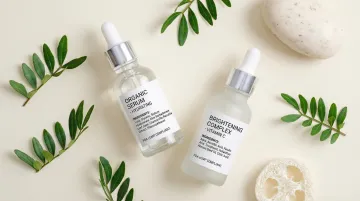
The clean beauty market is booming as consumers examine ingredient lists and demand toxin-free formulations. A serum costing $3-$8 to manufacture can retail for $30-$80, and consumers view serums as essential daily treatments rather than optional luxuries.
| Profit Margin Potential | Startup Investment | Key Success Factors |
|---|---|---|
| 50-70% with proper branding and premium positioning | $1,000-$3,000 for initial inventory (MOQ typically 500-1,000 units) | Instagram-friendly packaging, ingredient transparency, clinical claims support, influencer marketing potential |
Key Advantage: Small bottle sizes mean low shipping costs. Serums are used daily, driving repeat purchases every 2-3 months.
Working with FDA cGMP compliant manufacturers—like Poison-Free Private Label's Texas facility—lets you differentiate with quality certifications while maintaining toxin-free formulations that align with consumer demand for clean beauty.
Premium Pet Treats
The $152 billion pet industry shows steady growth even during economic downturns. Pet owners make emotional purchasing decisions that prioritize health over price.
Functional treats addressing specific needs (joint health, dental care, calming) command premium pricing.
| Profit Margin Potential | Startup Investment | Key Success Factors |
|---|---|---|
| 45-60% depending on ingredients and positioning | $800-$2,500 for initial production run | Health benefit claims, human-grade ingredients, specialty diets (grain-free, limited ingredient), local/regional branding |
The Edge: 52% of pet parents use subscription purchasing, creating predictable recurring revenue.
Private label pet treats achieve 30-50% margins compared to 20-35% for national brands.
Collagen Supplements
The wellness and anti-aging markets drive collagen demand across both human and pet segments. The pet collagen treats market alone is projected to reach $793 million in 2025, while human collagen supplements continue strong growth.
| Profit Margin Potential | Startup Investment | Key Success Factors |
|---|---|---|
| 55-75% with direct-to-consumer model | $2,000-$5,000 including testing and certification | Third-party testing certificates, subscription offerings, before/after testimonials, influencer partnerships |
Success Driver: Daily consumption creates automatic replenishment cycles. Collagen's visible benefits (skin, hair, nails, joints) generate strong testimonials and word-of-mouth marketing.
Subscription models lock in customer lifetime value.
Natural Candles
The home fragrance market combines giftability with repeat personal purchases. Natural candles using soy or coconut wax and essential oils appeal to consumers avoiding synthetic fragrances and petrochemical-based paraffin.
| Profit Margin Potential | Startup Investment | Key Success Factors |
|---|---|---|
| 40-60% with premium positioning | $500-$1,500 for starter inventory | Unique scent profiles, aesthetic packaging, eco-friendly materials (soy/coconut wax), seasonal collections |
Low manufacturing complexity makes this accessible for first-time entrepreneurs. Strong visual appeal drives social media engagement.
Seasonal collections and gift sets create multiple purchase occasions throughout the year.
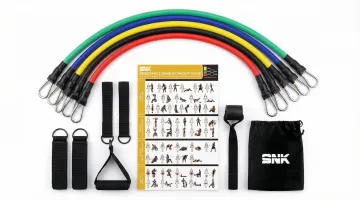
Resistance Bands & Fitness Accessories
The home fitness boom created sustained demand for portable, space-efficient equipment. Resistance bands are lightweight (low shipping costs), durable (low returns), and easily bundled into sets that increase average order value.
| Profit Margin Potential | Startup Investment | Key Success Factors |
|---|---|---|
| 45-65% especially when sold in sets | $800-$2,000 for initial inventory | Workout guide inclusion, multiple resistance levels, portable design, social media workout content |
Why This Works: Bundle multiple resistance levels into sets to increase perceived value.
Create accompanying digital content (exercise guides, video tutorials) to build brand authority and customer engagement.
How to Choose the Right High-Margin Products for Your Brand
Selecting the wrong product is the fastest way to burn through capital.
Avoid these common mistakes:
- Choosing products based on personal preference rather than market data
- Ignoring shipping costs and logistics complexity
- Underestimating the importance of repeat purchase potential
Product Evaluation Framework
Research Market Demand:
- Google Trends confirms sustained interest over 12+ months
- Amazon Best Sellers reveal top-performing products in your category
- Keyword tools show search volume (aim for 5,000+ monthly searches)
- Competitor pricing analysis ensures healthy margin opportunity
Calculate Total Landed Costs:
- Manufacturing cost per unit
- Shipping from manufacturer to your location or fulfillment center
- Platform fees (Amazon: 15%, Shopify: 2-3%)
- Payment processing (2-3%)
- Packaging and labeling
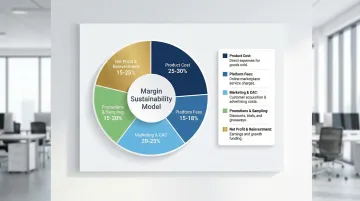
- Target final cost at 25-30% of retail price to maintain healthy margins
Assess Branding Differentiation:
- Can you tell a unique story around ingredients or sourcing?
- Are there underserved customer segments (vegan, toxin-free, specialized needs)?
- Does the product category allow for visual differentiation through packaging?
- Can you create content that builds authority and community?
Finding the Right Manufacturing Partner
Finding aligned manufacturing partners is critical when building a clean, toxin-free brand. Seek manufacturers with:
- Relevant certifications - FDA cGMP compliance demonstrates quality systems
- Transparent ingredient sourcing - Manufacturers who disclose origins and avoid petrochemicals
- Low minimum order quantities - MOQs as low as 500 units make market testing accessible
- Fast turnaround times - Partners who ship within 1-2 weeks once materials arrive
Poison-Free Private Label, for example, formulates exclusively from plants, minerals, and vitamins—offering 500-unit minimums at 10,000-unit pricing. This combination of clean ingredients and entrepreneur-friendly terms enables startups to test premium positioning without massive capital commitments.
Once you've identified potential manufacturing partners, validate demand before committing to large production runs.
Market Validation Strategies
Start with One Hero Product: Don't launch a full product line. Focus resources on perfecting one product that solves a specific problem exceptionally well.
Test Demand Before Manufacturing:
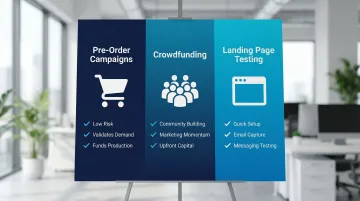
- Run pre-order campaigns to validate interest
- Use crowdfunding (Kickstarter, Indiegogo) to fund initial production
- Create landing pages with email capture to measure interest
- Survey your target audience about pain points and desired features
Gather Feedback Before Scaling:
- Send samples to potential customers for honest reviews
- Join relevant online communities to understand customer language and objections
- Test different messaging and positioning approaches
- Use data from initial sales to inform expansion decisions
Margin Sustainability
High gross margins don't guarantee profitability. Factor in customer acquisition costs to ensure long-term viability.
The Critical Ratios:
- LTV:CAC ratio of 3:1 is the gold standard for profitable growth
- 2:1 ratio is acceptable for early-stage growth but risky long-term
- 4:1+ ratio indicates high efficiency and room for aggressive growth investment
With average eCommerce CAC ranging from $50-$130, a customer with $150-$390 lifetime value is needed to hit the 3:1 benchmark. This requires either high initial order values or strong repeat purchase rates.
Build in Buffers:
- Plan for 15-20% of revenue going to promotions and discounts
- Set aside margin for product sampling and influencer partnerships
- Ensure margins support business growth and inventory reinvestment
- Account for platform fee increases and rising ad costs
Frequently Asked Questions
What is the difference between private label and white label products?
Private label products are manufactured exclusively for your brand with custom formulations and packaging, giving you complete control over branding. White label products are generic items that multiple brands can rebrand, offering faster time-to-market but less differentiation.
How much money do I need to start a private label business?
Startup costs range from $500-$2,000 for simple products like candles or basic skincare, $2,000-$5,000 for items requiring certifications like supplements, and $5,000-$10,000 for comprehensive launches with inventory and marketing.
What are the best platforms to sell private label products?
Amazon offers the largest reach but lower margins due to fees. Shopify excels for brand building and customer ownership with higher lifetime value. Etsy works for artisanal positioning, while retail partnerships provide scaling after proving online demand.
How do I find reliable private label manufacturers?
Use verified supplier directories, request samples and certifications, and check client references. Start with small test orders to evaluate quality and communication. For toxin-free products, seek manufacturers with FDA cGMP compliance and transparent ingredient sourcing.
What profit margin should I target for private label products?
Target 40-60% gross margins to cover operating expenses, marketing, and fees. Healthy net margins of 15-25% are sustainable. Maintain an LTV:CAC ratio of 3:1 to ensure customer acquisition costs don't erode profitability.
How long does it take to launch a private label product?
Expect 2-4 months total from concept to launch: 2-4 weeks for sampling, 4-8 weeks for manufacturing and shipping, and 2-4 weeks for listing setup. Timelines vary by product complexity and manufacturer location.