Introduction: The Rise of Private Label Brands in Retail
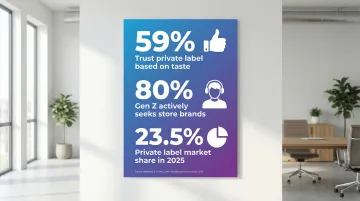
U.S. private label sales hit a record $282.8 billion in 2025, growing 3.3% and capturing 23.5% of market share. What changed? Consumers now trust store brands for quality, not just savings—59% choose them based on taste confidence, and 80% of Gen Z actively seeks them out.
This consumer shift opens clear advantages for retailers:
- Higher margins: 25-40% more profit than national brands
- Complete control: Set your own specifications, pricing, and positioning
- Customer loyalty: Build unique offerings competitors can't replicate
- Lower barriers: Start with minimums as low as 500 units
Whether you're testing your first product or expanding an established portfolio, private label manufacturing is now accessible to retailers of all sizes.
This guide walks you through everything retailers need to know: the business model fundamentals, financial benefits, step-by-step implementation, manufacturer selection criteria, and common pitfalls to avoid.
TLDR: Quick Takeaways for Busy Retailers
- Private label brands deliver 25-40% higher margins than national brands—without compromising quality
- Start with 500-unit minimums to test new products without tying up capital in inventory
- Choose manufacturers with FDA cGMP compliance and transparent ingredient sourcing
- Toxin-free formulations and clean labeling create differentiation consumers actively seek
What Is Private Labeling and How Does It Work?
Private label refers to products manufactured by one company but sold exclusively under another company's brand name. Unlike reselling national brands, private labeling gives retailers full control over specifications, packaging, pricing, and brand positioning.
The model works through partnership. Retailers define product requirements and branding. Manufacturers handle production complexity and quality control. This division of labor allows retailers to enter new categories without building manufacturing infrastructure.
Difference Between Private Label, White Label, and National Brands
Understanding these distinctions helps retailers choose the right strategy for their business goals and resources.
| Feature | Private Label | White Label | National Brand |
|---|---|---|---|
| Exclusivity | Exclusive to one retailer | Same product sold to multiple retailers | Available everywhere |
| Customization | Full control over formulation and packaging | Minimal—pre-made products with your logo | None—retailer has no input |
| Pricing Control | Complete control over retail price | Control over retail price only | Limited—subject to MSRP |
| Investment | Higher—custom development costs | Lower—no development needed | Lowest—just wholesale purchase |
| Differentiation | High—unique products competitors can't copy | Low—competitors may sell identical products | None—same product at competing stores |
Private label offers maximum differentiation and profit potential but requires more upfront investment in product development. White label provides faster market entry with lower risk but less competitive advantage. National brands require minimal effort but offer the smallest margins and no differentiation.
The Private Label Business Model
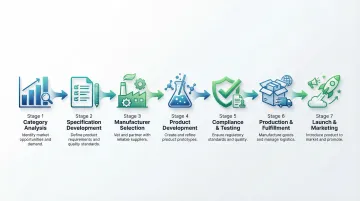
Once you've chosen the private label approach, the process typically unfolds in seven key stages:
- Category Analysis - Retailers identify high-margin opportunities or gaps in their product assortment
- Specification Development - Define product attributes including ingredients, quality tier, sizes, and packaging requirements
- Manufacturer Selection - Vet potential partners based on certifications, MOQs, production capacity, and quality standards
- Product Development - Work with manufacturers on formulation, samples, and packaging design
- Compliance & Testing - Ensure regulatory adherence (FDA, USDA) and quality validation
- Production & Fulfillment - Manufacturer produces and ships finished goods
- Launch & Marketing - Retailer positions, prices, and promotes products under their brand
Manufacturers handle production complexity—sourcing raw materials, maintaining certifications, managing quality control, and fulfilling orders. Retailers focus on what they do best: understanding customers and building brand relationships.
Why Retailers Are Choosing Private Label Brands
Higher Profit Margins and Better Economics
The primary financial driver is straightforward: private label products deliver gross margins 25-30% higher than national brands. Research shows private label profit margins reach 35% compared to just 26% for national brands.
These superior economics come from eliminating middlemen and brand licensing fees. When you resell a national brand, you're paying for their advertising campaigns, brand development costs, and distribution networks. With private label, those expenses disappear. You work directly with manufacturers, control pricing strategy, and retain the full margin.
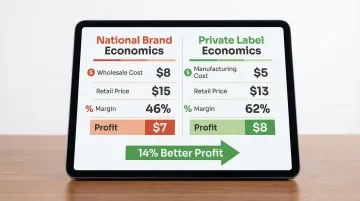
Example calculation:
- National brand wholesale cost: $8 per unit, retail price: $15 (46% margin, $7 profit)
- Private label manufacturing cost: $5 per unit, retail price: $13 (62% margin, $8 profit)
The private label product costs less to produce, retails for less (offering customer value), yet generates more profit per unit.
Complete Control Over Brand and Customer Experience
Private label ownership gives you control over every customer interaction:
- Product specifications and ingredient quality
- Packaging design and aesthetics
- Pricing strategy and promotional tactics
- Marketing messaging and brand positioning
This control lets you align products exactly with your brand identity and customer values.
Equally important: you own the customer relationship and purchase data. When customers buy national brands from your store, they're building loyalty to that brand, not to you.
Private label purchases build loyalty to your retail banner, making customers more likely to shop with you exclusively rather than comparison shopping across competitors.
Differentiation in a Crowded Marketplace
Private label creates unique product offerings competitors cannot replicate. While every grocery store carries Coca-Cola and Tide, only Costco sells Kirkland Signature. Only Trader Joe's and Target have their distinctive branded lines.
This exclusivity transforms products into destination items. Kirkland Signature generates nearly 35% of Costco's total sales, and approximately 69% of Trader Joe's products carry the Trader Joe's brand. Customers visit these stores specifically for products they can't find elsewhere.
Flexibility to Respond to Market Trends
Beyond differentiation, private label enables faster adaptation to consumer trends compared to waiting for national brands to innovate. When clean beauty, sustainable packaging, or plant-based formulations gain traction, retailers with private label programs can respond in months rather than years.
This agility is particularly valuable in trend-responsive categories like personal care, household products, and specialty foods.
For example, when consumers increasingly demanded toxin-free personal care products, retailers with private label capabilities could quickly develop clean formulations. Those relying solely on national brands had to wait for major manufacturers to reformulate existing lines.
Building Long-Term Customer Loyalty
Quality private label products drive store loyalty and repeat purchases. When customers trust your store brand, they're more likely to shop with you exclusively rather than price-shopping across competitors.
Research shows 59% of consumers now trust private label products based on taste, and nearly 80% shop them for value.
This trust compounds over time. Customers who have positive experiences with one private label product are more likely to try others in your portfolio, gradually increasing their overall spending and lifetime value.
Key Benefits of Private Label Brands for Retailers
Benefit 1: Significant Margin Improvement
Specific categories show dramatic profitability differences.
Grocery category example:
- National brand pasta sauce: Wholesale $2.50, retail $4.99 (50% margin, $2.49 profit)
- Private label pasta sauce: Manufacturing $1.20, retail $3.99 (70% margin, $2.79 profit)
The private label version costs 52% less to produce, retails 20% lower (providing customer value), yet generates 12% more profit per unit.
Scale this across hundreds of SKUs and thousands of units, and the financial impact becomes transformative.
Benefit 2: Exclusive Products That Drive Traffic
Unique private label products become destination items that bring customers to your store rather than competitors.
This is particularly powerful when your private label offers something genuinely differentiated—unique flavors, clean ingredients, innovative packaging, or specialized formulations unavailable elsewhere.
Target's Good & Gather brand grew to $2 billion in sales within three years of launch by offering modern, clean-ingredient foods that resonated with their core demographic. The brand didn't just generate revenue; it reinforced Target's brand positioning as a destination for quality, affordable lifestyle products.
Benefit 3: Brand Recognition and Equity Building
Successful private label programs enhance overall retailer brand perception. When customers experience quality private label products, it elevates their perception of everything else you sell.
The halo effect works like this:
- Customers try your private label shampoo and love the quality
- They begin associating your retail banner with quality and value
- This positive perception extends to their entire shopping experience
- Your brand equity increases across all product categories
Premium retailers invest heavily in private label because it reinforces brand identity and builds equity that extends beyond individual products.
Benefit 4: Lower Minimum Order Quantities for Testing
Modern manufacturers offer MOQs as low as 500-1,000 units, enabling market testing without massive investment. This represents a fundamental shift from traditional manufacturing, which typically required 10,000+ unit minimums.
Lower MOQs allow retailers to test multiple product variations, gather customer feedback, and refine formulations before scaling production.
Poison-Free Private Label offers 500-unit minimums with pricing typically reserved for 10,000+ unit orders. This approach makes private label accessible for small retailers testing new product categories or validating market demand before committing to larger production runs.
Benefit 5: Customization for Target Audience
Private label allows retailers to tailor products precisely to customer demographics and preferences. You can customize:
- Ingredients/formulations - Clean ingredients for health-conscious shoppers, vegan options, allergen-free formulations
- Packaging sizes - Single-serve for urban millennials, family sizes for suburban households
- Features - Eco-friendly packaging, refillable containers, travel-friendly formats
- Positioning - Premium artisanal lines, everyday value tiers, or specialized niche products
This customization creates products that resonate deeply with your specific customer base rather than appealing to the mass market.
Benefit 6: Protection from Price Wars
Private label insulates retailers from price competition on national brands. When competitors discount Tide or Coca-Cola, you must match or lose sales.
With private label, you control pricing strategy and compete on value perception beyond just price. Customers evaluate private label products holistically:
- Product quality and performance
- Uniqueness and differentiation
- Alignment with retailer values
- Overall shopping experience
This shifts competition from pure price to differentiated value, protecting margins and building sustainable competitive advantage.
How to Start Your Private Label Brand: Step-by-Step Process
Step 1: Identify the Right Product Category
Select categories strategically using this framework:
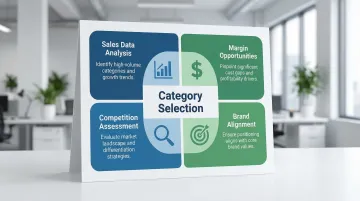
Analyze sales data - Identify high-volume categories where you already have customer traffic and trust. Look for products customers buy repeatedly rather than occasionally.
Assess margin opportunities - Calculate the margin difference between current wholesale costs and potential private label manufacturing costs. Categories with the largest gaps offer the best financial returns.
Evaluate competition - Categories with fewer established private label offerings or where national brands dominate present greater differentiation opportunities.
Consider brand alignment - Choose categories that reinforce your overall brand positioning. A premium retailer might start with specialty foods or clean beauty; a value retailer might focus on household essentials.
Focus on categories where you can deliver clear value to customers:
High-success categories include:
- Personal care (shampoo, soap, deodorant, skincare)
- Household essentials (cleaning products, paper goods)
- Food and beverage (pantry staples, snacks)
- Beauty and cosmetics
These categories have strong consumer acceptance of private label and repeat purchase patterns that build loyalty.
Once you've selected your category, the next step is understanding exactly what your customers want.
Step 2: Research Your Target Market and Competition
Before developing products, confirm demand and identify opportunities.
Survey existing customers to understand their current buying behavior:
- What products do they currently buy from competitors?
- What features or attributes do they value most?
- What frustrates them about current options?
- Would they try a store-branded alternative?
Analyze competitor private label offerings to find your positioning:
- Which categories have they entered?
- How are products positioned (value vs. premium)?
- What price points do they use?
- How is packaging designed?
Identify gaps and opportunities that competitors have missed:
- Which customer needs aren't being met?
- Are there emerging trends competitors haven't addressed?
- Can you offer better quality, cleaner ingredients, or more sustainable packaging?
This research shapes every decision in your product development process.
Step 3: Define Your Product Specifications
Make key decisions that will guide manufacturer selection and production:
Quality level:
- Decide whether you're creating a value alternative, national brand equivalent, or premium offering
- This determines ingredient quality, packaging materials, and price point
Ingredients/materials:
- Specify formulation requirements: natural vs. synthetic, allergen-free, vegan, organic certifications, or toxin-free standards
- Consider clean formulations that avoid harmful chemicals (increasingly important to consumers)
Features and benefits:
- Define what makes your product valuable: effectiveness, safety, sustainability, convenience, or unique attributes
- Focus on 2-3 key differentiators rather than trying to compete on everything
Packaging style:
- Determine packaging materials (plastic, glass, aluminum)
- Choose design aesthetic (minimalist, premium, eco-friendly)
- Select size options based on customer usage patterns
Balance quality with target price point. Premium ingredients and packaging increase costs; ensure your final retail price remains competitive while delivering desired margins.
With specifications defined, you're ready to find a manufacturing partner.
Step 4: Find and Vet Potential Manufacturers
Evaluate manufacturers using these criteria:
Essential certifications:
- FDA cGMP compliance for cosmetics and supplements
- GFSI certifications (SQF, BRCGS) for food products
- Organic certifications if applicable
- ISO quality standards
Minimum order quantities - Ensure MOQs align with your budget and inventory capacity. Many manufacturers require 5,000-10,000 unit minimums, but some smaller facilities offer 500-1,000 unit minimums for market testing—ideal for entrepreneurs validating product concepts before scaling.
Production capacity - Verify they can scale as your business grows and handle your projected volume within reasonable timeframes.
Quality control processes - Ask about testing procedures, batch consistency measures, and contamination prevention protocols.
When vetting potential partners, ask:
- What certifications do you maintain?
- What are your typical lead times from order to delivery?
- Can you provide references from current clients?
- How do you handle quality issues or product recalls?
- What customization options do you offer?
Step 5: Request Samples and Test Quality
Never commit to production without evaluating samples first.
Order samples of:
- Proposed formulations
- Packaging materials and designs
- Labeling and printing quality
Evaluate carefully:
- Product quality - Does it meet your specifications? How does it compare to competitors?
- Packaging durability - Will it withstand shipping and shelf life?
- Consistency - Order multiple samples to check batch-to-batch consistency
- Alignment with specifications - Does it match what you requested?
Conduct informal testing with employees or small customer groups to gather feedback before committing to large production runs.
Once you've confirmed product quality, shift your focus to how customers will perceive it.
Step 6: Develop Your Brand Identity and Packaging
Packaging drives purchase decisions for 68% of shoppers considering private label products.
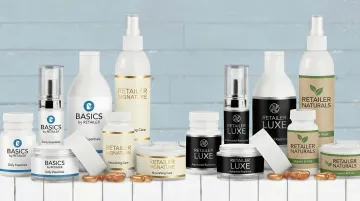
Your packaging communicates quality before customers even try the product. Strong branding requires:
Logo placement:
- Prominently feature your retail brand
- Ensure visibility at shelf level
Color scheme:
- Align with your overall brand identity
- Create distinct tiers (e.g., blue for value, black for premium)
Messaging:
- Communicate key benefits: "toxin-free," "sustainably sourced," "clinically tested"
- Use claims customers care about
Product name:
- Choose names that convey quality and differentiation
- Avoid generic descriptors that sound like commodity products
Label design:
- Balance information requirements with clean, attractive aesthetics
- Make key benefits scannable in under 3 seconds
Invest in professional design. Poor packaging undermines product quality perception and damages your retail brand reputation.
Choosing the Right Private Label Manufacturer
Essential Certifications and Compliance
Certifications ensure product safety, legal compliance, and customer trust. Different product categories require specific certifications:
For cosmetics and supplements:
- FDA cGMP (Cosmetic Good Manufacturing Practices) compliance ensures products are manufactured according to federal safety standards
- FDA facility registration for domestic manufacturers
For food products:
- GFSI certifications (SQF, BRCGS, or FSSC 22000) demonstrate adherence to global food safety standards
- USDA organic certification if making organic claims
- HACCP (Hazard Analysis Critical Control Point) plans
For household products:
- EPA registration for products making antimicrobial or pesticide claims
- Safety data sheets for hazardous materials
When evaluating manufacturers, verify they hold relevant certifications for your product category. Poison-Free Private Label maintains FDA cGMP compliance and brings 30 years of formulation experience to personal care and household product development.
This regulatory foundation ensures your products meet federal standards from day one.
Evaluating Minimum Order Quantities and Flexibility
MOQs directly impact cash flow and inventory risk, especially for new retailers or product testing.
Typical MOQ ranges by category:
| Product Category | Standard MOQ Range | Factors Affecting Quantity |
|---|---|---|
| Supplements | 100-10,000 bottles | Customization level |
| Cosmetics | 1,000-5,000 units | Custom vs. stock formulation |
| Food products | 1,000-10,000 units | Packaging complexity |
| Apparel | 1,000-5,000 units | Style variations |
Lower MOQs allow testing without massive capital commitment. Poison-Free Private Label offers 500-unit minimums with pricing normally reserved for 10,000+ unit orders.
This structure lets small retailers validate market demand before committing to large production runs.
Flexibility considerations:
- Can the manufacturer handle order size increases as you grow?
- Do they offer volume discounts at specific thresholds?
- What's the reorder lead time for repeat production?
Common Mistakes to Avoid in Private Labeling
Mistake 1: Choosing Price Over Quality
The temptation to select the cheapest manufacturer can be costly. Poor quality damages retailer brand reputation and customer trust long-term, with effects extending far beyond the individual product.
Research shows 24% of consumers cite quality concerns as a barrier to buying private label products. A single negative experience can cause customers to avoid your entire private label portfolio, not just that specific item.
Quality failures result in:
- Product returns and replacements
- Negative reviews and word-of-mouth damage
- Lost customer trust in your retail brand
- Reduced willingness to try other private label products
Prioritize manufacturers with strong quality control processes, relevant certifications, and proven track records over those offering the lowest prices.
Mistake 2: Inadequate Market Research and Testing
Launching without validating demand leads to excess inventory, wasted investment, and missed opportunities. Enthusiasm for a product idea doesn't guarantee customers will buy it.
Consequences of insufficient research:
- Inventory sitting unsold, tying up capital
- Markdown losses to clear excess stock
- Opportunity cost of resources invested in wrong products
- Damaged confidence in private label program
Start with small test batches (500-1,000 units) before scaling production. Gather customer feedback, monitor sell-through rates, and refine formulations based on real market response.
Mistake 3: Ignoring Trends in Clean and Sustainable Products
Beyond validating product-market fit, retailers must also stay ahead of shifting consumer priorities.
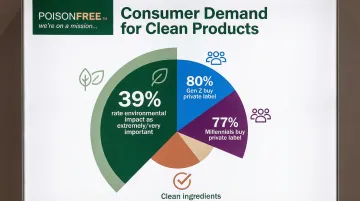
Consumer demand for clean ingredients, eco-friendly packaging, and sustainable manufacturing is accelerating. Research shows 39% of consumers rate environmental impact as extremely or very important when making purchasing decisions.
This trend is particularly strong in personal care and household categories, where customers scrutinize ingredient lists and packaging materials.
Younger demographics—80% of Gen Z and 77% of Millennials buy private label—prioritize these attributes even more strongly.
Aligning with clean and sustainable trends provides:
- Competitive differentiation from conventional products
- Premium positioning opportunities
- Appeal to high-value customer segments
- Protection from future regulatory changes
Partnering with manufacturers like Poison-Free Private Label, which specializes in toxin-free, poison-free, and petrochemical-free formulations, positions retailers to capitalize on this growing demand while building customer trust through transparent, safe ingredients made only from plants, minerals, and vitamins.
Frequently Asked Questions
What is the main advantage of private label goods for retailers?
The primary advantage is significantly higher profit margins—typically 25-40% more than reselling national brands—combined with complete control over branding, pricing, and customer experience. This creates exclusive products that differentiate your store from competitors.
What is the difference between private label and white label?
Private label is exclusive to one retailer with full customization of formulation and packaging. White label involves generic products that multiple retailers can rebrand with minimal customization, offering faster market entry but less differentiation.
How much does it cost to start a private label brand?
Costs can start as low as $5,000-$15,000 for initial small-batch production with manufacturers offering low MOQs. Key factors include product development fees ($500-$1,000 for custom formulations), per-unit manufacturing costs, packaging design, and minimum order quantities.
What are the best product categories for private label?
High-success categories include personal care (shampoo, soap, skincare), household essentials (cleaning products), food and beverage (pantry staples, snacks), and beauty products. These categories have strong consumer acceptance of store brands and repeat purchase patterns.
How do you find a reliable private label manufacturer?
Verify essential certifications (FDA cGMP for cosmetics, GFSI for food), check client references and reviews, request product samples for quality evaluation, and ensure MOQs align with your budget. Visit facilities if possible and confirm lead times meet your launch timeline.
What is the typical profit margin on private label products?
Private label margins typically range from 35-50% compared to 10-25% for national brands. Premium lines positioned on quality can achieve even higher margins, while value-tier products may fall at the lower end of this range.