Introduction
Traditional dropshipping traps sellers in brutal pricing wars with identical products. Private label dropshipping breaks that cycle—you create branded products that customers actually remember, without manufacturing overhead or massive inventory commitments.
Why are entrepreneurs choosing this model? It delivers four critical advantages:
- Build brand equity that increases business value over time
- Differentiate from commodity dropshippers selling identical products
- Control product quality and customer experience directly
- Create a competitive edge competitors can't easily copy
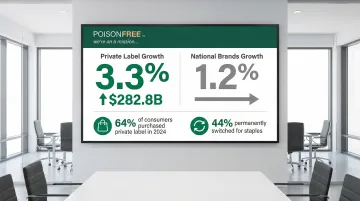
With U.S. private label sales hitting $282.8 billion in 2025—growing 3.3% while national brands managed just 1.2%—the shift toward private label is undeniable.
This model attracts side hustlers testing ecommerce, established dropshippers looking to differentiate, and aspiring brand-builders seeking lower-risk entry into product businesses.
This guide walks you through exactly what building a private label dropshipping business involves—from validation to launch and beyond.
Key Takeaways
- Build a unique brand without manufacturing or warehousing costs by combining private label products with dropship fulfillment
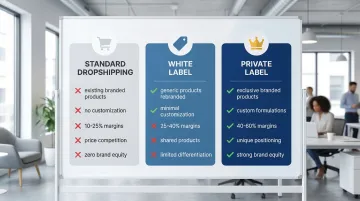
- Earn 40-60% gross margins versus 10-25% for standard dropshipping, but expect more upfront supplier vetting and brand development work
- Success requires validated demand, reliable dropship-enabled private label suppliers, strong brand identity, and customer trust
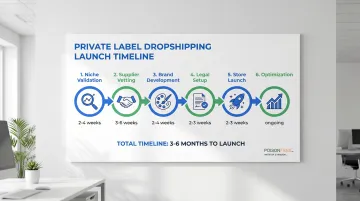
- Plan 3-6 months to launch with $2,000-$10,000 initial investment depending on category and branding
What Is Private Label Dropshipping?
Private label dropshipping means partnering with a manufacturer to create products under your exclusive brand name. The manufacturer ships directly to your customers, so you never hold inventory.
You're building a branded product business with lower capital requirements than traditional manufacturing, while maintaining more control than standard dropshipping of generic products.
How Private Label Differs from Other Models
Understanding the distinctions helps you choose the right approach for your business:
- Private label: You sell exclusive branded products with custom formulations or designs (MOQs typically 500-5,000 units). You own the brand, and no one else sells your exact product
- White label: You rebrand generic products with minimal customization (lower MOQs). Multiple businesses sell the same underlying product under different names, creating direct competition
- Standard dropshipping: You sell existing branded products as-is with no customization, no brand equity, and compete purely on price
What to Know Before You Start a Private Label Dropshipping Business
Private label dropshipping sits between standard dropshipping and full manufacturing, requiring more upfront investment and patience than the former, but less capital and complexity than the latter.
Time involvement: Expect 2-4 months for supplier vetting, product development, and branding before your first sale, plus 15-25 hours weekly in early stages for supplier communication, quality control, and brand building.
Upfront investment reality: Unlike standard dropshipping's near-zero startup costs, private label typically requires $2,000-$10,000 upfront. This covers:
- Minimum order quantities and product samples
- Custom packaging and branding design
- Initial marketing campaigns
- First-year inventory (ranging from $1,500 to $6,000 for small batches)
Income timeline: Plan for 4-6 months before steady revenue, as you'll need time to build brand awareness, establish trust, and optimize marketing. This isn't a "launch and profit immediately" model. Realistic expectations suggest 4-6 months to reach breakeven, with substantial profit taking 7-12 months or more.
Supplier dependency: Your business relies heavily on one or few suppliers for product quality, fulfillment speed, and inventory availability.
Supplier relationship management becomes a critical ongoing skill. If your supplier experiences delays or quality issues, your brand reputation suffers directly.
Differentiation requirement: Success depends on building genuine brand value through superior positioning, customer experience, or product quality. You can't compete solely on price against established brands or generic dropshippers—your brand must mean something to customers.
Why Start a Private Label Dropshipping Business? (When It Makes Sense)
Private label dropshipping makes strategic sense under specific conditions and goals, not as a guaranteed path to success for everyone. Private label dropshipping makes strategic sense under specific conditions, not as a guaranteed path for everyone. The model works best when you're building for differentiation, not just quick profits.
Three factors make private label dropshipping worth the investment:
Higher profit margins through brand value Private label products typically command 40-60% gross margins compared to 10-25% for standard dropshipping. Customers pay for brand value and perceived quality rather than comparing identical products across sellers.
This margin advantage creates breathing room for marketing, customer acquisition, and sustainable growth.
Defensible brand equity over time You're creating an asset that appreciates through customer loyalty, repeat purchases, and word-of-mouth. When customers remember your brand name and actively seek out your products, you've built something valuable—not just another seller offering the same items as everyone else.
Market positioning that avoids price wars When you identify an underserved niche or quality gap, private labeling lets you position as the premium or specialized alternative. You compete on differentiation rather than price.
Private label products carry approximately two times the gross margin of national brands, and 64% of U.S. consumers purchased private label products in 2024, with 44% permanently switching for staple items.
Early Decisions That Matter When Starting a Private Label Dropshipping Business
Most private label dropshipping failures stem from three areas: choosing the wrong product category, partnering with unreliable suppliers, or underestimating the brand-building timeline and costs.
Supplier structure decision: Choose between working with a private label manufacturer who dropships (like specialized manufacturers with low MOQs and direct shipping capabilities) versus using a dropshipping supplier who offers white labeling (less customization, faster start, lower commitment). True private label dropshipping—where manufacturers create custom products and ship directly to customers—is rarer than advertised.
Once you've identified your supplier model, the next critical decision is product category.
Product category selection: Some categories work better for private label dropshipping due to emotional purchasing, brand loyalty potential, and consumable nature:
- Best categories: Beauty and skincare, supplements, pet products, personal care, specialty foods
- Challenging categories: Electronics (high returns, rapid updates), fashion (sizing and trend issues)
Beauty and personal care show particular strength, with U.S. revenue projected to reach $108.19 billion in 2026, and online sales contributing 59.9% of the total.
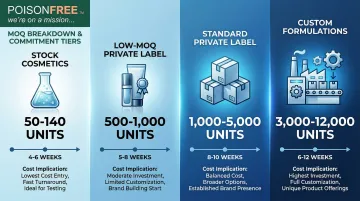
Minimum order quantity reality: Many private label manufacturers require 500-5,000 unit MOQs even with dropshipping arrangements, meaning you'll need to commit capital upfront. For example, cosmetics stock formulations typically require 50-140 units, while custom formulations can demand 3,000-12,000 units.
Finding rare suppliers offering true low-MOQ private label dropshipping requires thorough research and claim verification.
How to Start a Private Label Dropshipping Business – Step by Step
This section breaks the process into six practical execution stages, from validation through launch and optimization. Common mistakes include rushing to order inventory before validating demand, choosing suppliers based solely on price, launching without clear brand positioning, or scaling marketing before confirming product-market fit and supplier reliability.
Step 1 – Identify Your Niche and Validate Market Demand
Start by defining a specific, profitable niche. Research underserved markets, identify pain points in existing products, and find categories where customers value brand trust and quality over price comparison.
Validate demand through market research:
- Analyze search volume for relevant keywords using tools like Google Keyword Planner or Ahrefs
- Study competitor reviews on Amazon and niche retailers to identify improvement opportunities
- Join niche communities (Facebook groups, Reddit, forums) to understand customer language and priorities
- Survey potential customers on willingness to pay for improved products
Assess competition realistically:
- Identify 3-5 successful brands in your niche
- Analyze their positioning, price points, and customer reviews
- Determine if you can differentiate through superior product quality, better customer experience, or more authentic brand story
- Look for quality gaps where existing products underdeliver
Step 2 – Find and Vet Reliable Private Label Suppliers
Research potential suppliers through industry directories, trade shows, and manufacturer databases like Alibaba or ThomasNet. Focus on those offering both private labeling and direct-to-customer fulfillment capabilities.
Vet suppliers thoroughly:
- Request and test product samples for quality—never commit without physical samples
- Verify their dropshipping fulfillment capabilities and timelines (many claim to dropship but don't)
- Confirm minimum order quantities and reorder terms in writing
- Check references from current clients to verify reliability
- Assess communication responsiveness during the vetting process
Negotiate terms that protect your business:
- Clarify customization options and associated costs
- Establish quality control processes and defect handling procedures
- Define shipping timeframes and backup plans for stockouts
- Secure exclusivity agreements if possible to prevent competitors from accessing your formulations
- Document everything in writing before making commitments
Understanding the manufacturing-to-dropship hybrid model: Some suppliers specialize in entrepreneur-friendly terms with low MOQs (500-1,000 units) and offer to store and ship on your behalf. For example, manufacturers in personal care and household products may offer 500-unit minimums with pricing comparable to bulk orders. Standard lead times run 4-6 weeks for private label products, extending to 6-12 weeks for custom formulations.
Once you've secured reliable suppliers, the next step is building the brand identity those products will represent.
Step 3 – Develop Your Brand Identity and Positioning
Build a distinctive brand identity that sets you apart. Develop a memorable brand name and logo, define your brand voice and values, and craft a compelling story that explains why you created these products and who you serve.
Design professional packaging and labeling:
- Work with designers to create custom packaging that reflects your brand positioning
- Ensure compliance with relevant labeling regulations for your product category (FDA for cosmetics/supplements, FTC for claims)
- Include elements that encourage unboxing experiences and social sharing
- Budget accordingly: unbranded boxes cost $0.10-$2.00, branded options $2.00-$25.00 per box
Establish brand positioning:
- Clearly articulate what makes your products different from alternatives (superior ingredients, ethical sourcing, better results, specialized formulation)
- Define your target customer persona in detail—demographics, values and lifestyle, pain points, values
- Set pricing that reflects your brand positioning (premium, value, or specialized) rather than competing on price alone
Step 4 – Set Up Legal, Compliance, and Business Infrastructure
Register your business properly. Choose an appropriate business structure (LLC recommended for liability protection), register your business name, and obtain necessary licenses. Trademark your brand name and logo to protect your intellectual property. USPTO trademark application fees typically run $350 per class, with the process taking 12-18 months.
Ensure product compliance:
- Research regulations specific to your product category—MoCRA now mandates facility registration and product listing for cosmetics, while dietary supplements face strict FDA cGMP requirements
- Verify your supplier meets compliance requirements and can provide necessary documentation
- Secure appropriate product liability insurance—essential after reaching $10,000 in monthly sales on Amazon, typically costing $700-$3,000 annually
Set up operational systems:
- Establish a business bank account and accounting system
- Implement inventory tracking even though supplier holds stock
- Create customer service processes and policies
- Set up payment processing that handles your expected volume
Step 5 – Build Your Online Store and Launch Your Brand
Create a professional ecommerce website that converts visitors into customers:
- Choose a platform that integrates with your supplier's systems if possible
- Design a site that reflects your brand positioning and builds trust
- Write compelling product descriptions that emphasize benefits and differentiation
- Include high-quality product photography and lifestyle images
Implement trust-building elements:
- Display customer reviews and testimonials prominently (seed initial reviews through product sampling)
- Showcase your brand story and values on an About page
- Provide detailed product information and ingredient/material transparency
- Offer strong guarantees or return policies
- Include security badges and clear shipping information
Plan your launch strategy:
- Build an email list through pre-launch content or lead magnets
- Create launch-specific promotions or limited offers
- Coordinate social media presence across relevant platforms
- Consider influencer partnerships or PR outreach to generate initial awareness
Step 6 – Drive Traffic, Optimize, and Scale Systematically
Focus initial marketing on channels where your target customers actively seek solutions: content marketing and SEO for long-term organic traffic, paid social ads (Facebook, Instagram, TikTok) for testing messaging and audiences, and email marketing for nurturing and retention.
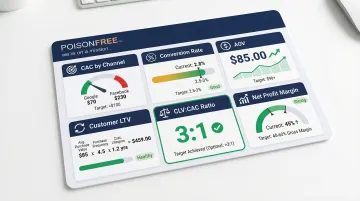
Rising costs require careful planning—customer acquisition cost increased 40-60% between 2023 and 2025, with Facebook Ads averaging $230 CAC and general Google Ads at $70.11.
Track key metrics carefully:
- Customer acquisition cost by channel
- Conversion rate (aim for 2.5-3% or higher)
- Average order value
- Customer lifetime value
- Repeat purchase rate
- Net profit margin after all costs
Optimize before scaling:
- Resolve product quality issues immediately based on customer feedback
- Improve supplier fulfillment speed and accuracy
- Refine marketing messaging based on what resonates
- Ensure unit economics are profitable (aim for CLV:CAC ratio of 3:1 or higher) before increasing ad spend significantly
Conclusion
Building a successful private label dropshipping business requires more patience and investment than standard dropshipping, but creates a defensible brand asset with higher margins and long-term value. Standard dropshipping gets you to market faster. Private label builds something customers remember and return to.
Your success depends on choosing the right niche and supplier, building genuine brand differentiation that customers care about, and systematically validating and optimizing before scaling. The entrepreneurs who skip validation steps or rush to scale burn through capital without building sustainable businesses.
The path takes longer than "get rich quick" dropshipping promises. But entrepreneurs who build real brand value and customer relationships create sustainable businesses with compounding returns. Focus on brand building over short-term arbitrage, and you'll join the 76% of businesses that survive their first year—with a foundation built to last far beyond it.
Frequently Asked Questions
How much money do I need to start a private label dropshipping business?
Expect to invest $2,000-$10,000 to properly launch. This covers minimum order quantities (500-1,000 units), product samples, branding, website setup, and initial marketing. Beauty and personal care require higher investment due to compliance and packaging, while simpler household items fall on the lower end.
What's the difference between private label dropshipping and regular dropshipping?
Private label creates products under your exclusive brand with custom formulations and packaging, while regular dropshipping sells existing branded products as-is. Private label offers higher margins (40-60% vs. 10-25%) and brand equity, but requires more investment ($2,000-$10,000 vs. near-zero) and longer timelines (3-6 months vs. days).
How long does it take to launch a private label dropshipping business?
Set realistic expectations of 3-6 months from initial research to first sale. This includes supplier vetting, product development (4-8 weeks for stock formulations, 8-16 weeks for custom), branding and packaging design, website creation, and manufacturing lead times. Regulated categories like cosmetics require additional time for compliance work.
Can I really dropship private label products, or do I need to hold inventory?
True private label dropshipping exists but is rarer than advertised. Some manufacturers offer low MOQs with integrated fulfillment, while many require you to purchase inventory upfront and store it with them, a 3PL, or yourself. When evaluating suppliers, verify their fulfillment capabilities, storage fees, and per-order shipping processes before committing.
What product categories work best for private label dropshipping?
Top categories include beauty and skincare, supplements, pet products, personal care, and specialty foods. These work well because they're consumable (driving repeat purchases), emotionally driven (supporting brand loyalty), and offer quality differentiation that justifies premium pricing. Avoid fashion and electronics due to high return rates.
How do I find legitimate private label suppliers who actually dropship?
Research manufacturer directories like ThomasNet or Alibaba, and attend trade shows to meet suppliers directly. Always request samples and verify fulfillment capabilities before committing—ask for client references and confirm reliability. Companies like Poison-Free Private Label in Northern Texas specialize in low-MOQ manufacturing for beauty and personal care with fulfillment services.