Introduction: Why Private Label Pricing Matters More Than Ever
Private label products have achieved unprecedented market dominance. Today, 99% of U.S. households purchase private label products, with health & beauty reaching 99.2% penetration and household categories at 98.9%. Consumer behavior has fundamentally shifted beyond budget-conscious shopping to embrace private label as a quality choice.
This widespread adoption makes pricing strategy more critical than ever for manufacturers and brand owners. You're competing against national brands with decades of consumer trust while managing perceived value and maintaining healthy margins.
The price gap between private label and national brands has grown 38% since 2019, creating both opportunity and complexity for private label pricing.
This guide covers foundational pricing concepts, strategic frameworks, common profitability mistakes, and practical calculation methods. You'll discover how to price competitively while protecting your margins—whether launching your first product or optimizing an established line.
TLDR: Key Takeaways on Private Label Pricing
- Use the 38% price gap vs. national brands to position competitively without sacrificing margins
- Factor in your costs, target market, competition, and quality perception—not just one variable
- Premium private label now captures 40% of consumer spend—quality formulations command higher prices
- Toxin-free and natural formulations justify premium positioning with today's health-conscious consumers
- Test multiple price points affordably with 500-unit MOQs instead of committing $50K+ upfront
Understanding Private Label Pricing Fundamentals
What is Private Label Pricing?
Private label pricing is the strategic process of setting prices for products manufactured by third parties but sold under your own brand name. Unlike national brand pricing, you're not constrained by Minimum Advertised Price (MAP) policies or manufacturer restrictions. You control your margins directly and can adjust prices based on market conditions without external approval.
The traditional model priced private label products 20-40% below national brand equivalents. That's changing rapidly.
Premium private labels now close this gap significantly, with some products priced only 5-15% below or even at parity with national brands when offering superior quality or unique benefits like toxin-free formulations.
Key Pricing Objectives for Private Label Products
Your pricing strategy should align with clear objectives:
- Profit margin maximization: Ensures each unit sold contributes meaningfully to your bottom line (typical private label gross margins: 30-50%, varying by category and positioning)
- Competitive market positioning: Determines where you sit relative to alternatives—value option, comparable substitute, or premium choice
- Brand perception: Uses price as a quality signal (too low suggests inferiority; too high without justification breeds skepticism)
- Volume and market share: May justify penetration pricing initially, accepting lower margins to build customer base quickly
Your objectives vary by product tier. Value-tier products prioritize volume and accessibility. Premium products emphasize margin and brand perception. Mid-tier products balance both.
The Relationship Between Price and Perceived Value
Price psychology in private label has evolved dramatically. Lower prices once automatically signaled lower quality.
Today's informed consumers understand that private label often uses the same manufacturers as national brands, just without the marketing markup.
Quality indicators shift perception powerfully. Labels like "toxin-free," "100% natural," "organic," or "petrochemical-free" justify higher price points by addressing specific consumer concerns.
When Poison-Free Private Label emphasizes formulations made only from plants, minerals, and vitamins, this ingredient transparency builds pricing power by validating premium positioning.
The sweet spot balances competitive positioning with value communication. Price too low and health-conscious consumers question ingredient quality.
Price at national brand levels without clear differentiation and they'll choose the familiar name. The goal is finding where price validates quality without appearing opportunistic.
Key Factors That Influence Private Label Pricing
Your Cost Structure and Profit Margins
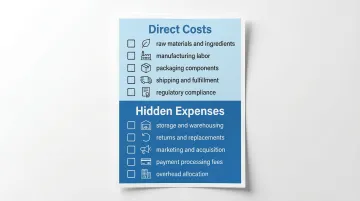
Accurate cost accounting is non-negotiable. Your total cost includes:
- Raw materials and ingredients
- Manufacturing labor and facility costs
- Packaging components (bottles, jars, boxes, labels)
- Distribution and fulfillment expenses
- Overhead allocation (utilities, rent, equipment, administrative costs)
Calculate your minimum viable price by adding desired profit margin to total costs. If your all-in cost is $8.00 per unit and you target a 40% gross margin, your minimum price is $13.33 ($8.00 ÷ 0.60).
This baseline protects your margins while remaining competitive.
Order volume dramatically impacts unit economics. A 500-unit production run can cost 100% more per unit than a 5,000-unit run—$7.00 versus $3.50. This is where manufacturers offering low MOQs with volume pricing create competitive advantage.
At Poison-Free Private Label, 500-unit orders receive the same per-unit pricing as 10,000-unit orders, eliminating the typical small-batch penalty and enabling entrepreneurs to test pricing strategies without massive inventory commitments.
Competitive Landscape and Price Positioning
Conduct systematic competitive analysis by identifying 3-5 direct competitors—both national brands and other private label products in your category. Document their retail prices, promotional frequency, and any value-adds (free shipping, bundling, subscription discounts).
Calculate your price gap: the percentage difference between your price and comparable products. If a national brand retails for $25.00 and you price at $18.75, you're positioned at a 25% discount—solidly in the "value alternative" zone.
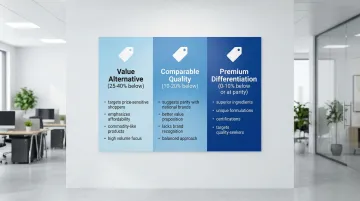
Strategic positioning options:
- Value alternative (25-40% below): Emphasizes affordability, targets price-sensitive shoppers
- Comparable quality (10-20% below): Suggests parity with national brands at better value
- Premium differentiation (0-10% below or at parity): Justifies pricing through superior ingredients, certifications, or unique formulations
These positioning strategies work because consumer behavior supports them. Premium private label now accounts for 40% of all private label spend, showing clear willingness to pay for quality—especially in personal care and household categories where ingredient safety matters.
Target Customer and Market Segmentation
Different segments exhibit different price sensitivities:
Price-conscious shoppers prioritize savings and compare prices actively. They're drawn to value positioning and respond well to clear percentage-off messaging against national brands.
Quality-seekers care about performance and ingredients. They'll pay more for proven efficacy, clean formulations, and brand trust. Price is secondary to results.
Health-conscious consumers specifically seek toxin-free, natural, or organic options. They demonstrate willingness to pay premiums for organic products, though often less than the full market premium. This segment is ideal for premium private label positioning.
Use demographic and lifestyle data to refine pricing. Younger consumers (Gen Z, Millennials) show greater openness to private label and sustainability-focused products.
Higher-income households increasingly purchase private label—49% of households earning over $100,000 report predominantly buying private label.
Niche positioning amplifies pricing power. A generic "natural" body lotion competes broadly. A "100% toxin-free, petrochemical-free body lotion for sensitive skin" targets a specific segment willing to pay for that exact solution.
Product Differentiation and Unique Value Propositions
Differentiation factors that justify premium pricing include:
- Ingredient quality: Organic, wild-harvested, or sustainably sourced ingredients
- Certifications: FDA cGMP compliance, organic certifications, cruelty-free verification
- Formulation uniqueness: Proprietary blends, clinically-tested actives, or specialized delivery systems
- Ethical sourcing: Fair trade, local sourcing, or environmental sustainability commitments
- "Free-from" claims: Paraben-free, sulfate-free, synthetic fragrance-free, petrochemical-free
Connecting Features to Pricing Power
Translate these benefits into pricing power by connecting features to consumer outcomes. "100% toxin-free formulation" becomes "Safe for your family without compromising effectiveness."
This messaging approach works. Products with multiple ethical certifications generate higher purchase intention and willingness to pay premiums.
The clean label ingredients market is projected to reach $64.1 billion by 2026, growing at 6.8% annually. This trend validates premium pricing for toxin-free private label products that deliver on clean ingredient promises.
Market Conditions and Economic Factors
Economic uncertainty typically benefits private label. During the 2020 economic disruption, private label sales grew 29% versus 15.4% for national brands.
Tight budgets drive consumers toward private label alternatives.
Inflation creates both challenges and opportunities. Rising input costs pressure margins, but consumers become more price-sensitive and open to private label. Monitor cost trends closely and adjust prices strategically rather than reactively absorbing increases.
Supply chain disruptions affect availability and costs. Diversified supplier relationships and flexible formulations help maintain consistent pricing even when specific ingredients face shortages.
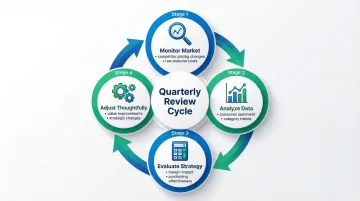
Monitor market trends quarterly at minimum:
- Competitor pricing changes
- Raw material cost fluctuations
- Consumer sentiment and economic indicators
- Category-specific trends (clean beauty growth, sustainability focus)
Adjust prices thoughtfully, not reactively. Frequent changes confuse customers and erode trust.
Strategic adjustments work best when tied to clear value improvements—better packaging, enhanced formulation, or expanded certifications—that maintain brand integrity while justifying the change.
Private Label Pricing Strategies
Cost-Plus Pricing Strategy
Cost-plus pricing adds a fixed markup percentage to your total product costs. If your all-in cost is $10.00 per unit and you apply a 2.5x markup, your retail price is $25.00.
When it works best:
- Stable, predictable costs with minimal volatility
- Straightforward competitive landscape without aggressive price competition
- Products where cost directly correlates with perceived value
Pros:
- Simple to calculate and maintain
- Guarantees minimum margin on every sale
- Easy to explain internally and justify price increases when costs rise
Cons:
- Ignores what customers are willing to pay
- Misses opportunities to capture value from differentiation
- Can price you out of the market if costs are high or underprice if costs are low relative to value
Competitive Pricing Strategy
Competitive pricing sets your price based on what competitors charge for similar products. You analyze the market and position deliberately relative to alternatives.
Positioning options:
Value alternative (20-35% below national brands): Targets price-conscious shoppers who want savings. Works well for commodity-like products where differentiation is minimal.
Comparable substitute (10-20% below): Suggests similar quality at better value. Ideal when your product matches national brand quality but lacks brand recognition.
Premium option (at or slightly above national brands): Justified by superior ingredients, unique formulations, or strong brand story.
Monitor competitor pricing regularly but adjust strategically, not reactively. If a competitor drops prices 15%, don't automatically match. Ask why first: inventory issues, testing, or permanent shift?
Maintain your positioning unless market dynamics fundamentally change.
Value-Based Pricing Strategy
Value-based pricing asks "What is this worth to my customer?" rather than "What did it cost me to make?" You're pricing to perceived value, not production costs.
Assess willingness to pay through:
- Customer surveys asking maximum acceptable price
- Focus groups discussing value perceptions
- Purchase behavior analysis (conversion rates at different price points)
- A/B testing different prices to measure price sensitivity
Unique attributes increase perceived value and pricing power. A toxin-free facial cleanser isn't just soap—it's peace of mind for health-conscious consumers worried about ingredient safety. That peace of mind justifies premium pricing.
This works best for truly differentiated products. If you're offering something truly unique (specialized formulation, rare ingredients, specific health benefits), cost-plus pricing leaves money on the table. Price to value instead.
Penetration Pricing Strategy
Penetration pricing launches products at lower prices to gain market share quickly, then gradually increases prices as brand awareness builds.
When it makes sense:
- Entering a new market where you're unknown
- Building brand awareness against established competitors
- Categories where trial is critical and repeat purchase rates are high
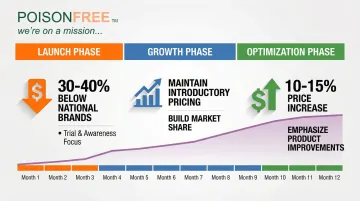
Execution approach: Launch at 30-40% below national brands to drive trial. After 6-12 months and achieving target market share, gradually increase prices 10-15% while emphasizing product improvements or value-adds that justify the increase.
Risks to consider:
- Difficult to raise prices without losing price-driven customers
- Margin squeeze threatens viability if price increases stall
- May signal low quality in premium categories like skincare
Use penetration pricing selectively. It's a tool for specific situations, not a default strategy.
Premium Pricing Strategy
Premium pricing positions your private label at or above national brand prices based on superior quality or unique benefits. Premium private label now accounts for 40% of all spending in the category.
What's required to justify premium pricing:
Exceptional quality: Demonstrably better ingredients, formulations, or performance than national brand alternatives.
Certifications and credentials: FDA cGMP compliance, organic certifications, third-party testing results that validate quality claims.
Unique formulations: Proprietary blends, specialized actives, or innovative delivery systems that competitors don't offer.
Strong brand story: Authentic narrative about why your product exists and why it's worth more. A 30-year track record creating toxin-free formulations—like Poison-Free Private Label's philosophy of "if I won't use it, I won't make it"—builds this credibility.
Premium pricing works particularly well for toxin-free, natural, and specialized formulations targeting health-conscious consumers. These buyers prioritize ingredient safety and efficacy over price savings.
Dynamic Pricing and Promotional Strategies
Use temporary discounts and promotions to drive volume without permanently devaluing your brand. Strategic promotions serve specific purposes:
- Launch promotions: Introductory discounts to drive trial (15-20% off for first month)
- Seasonal sales: Holiday or seasonal promotions aligned with shopping patterns
- Bundle pricing: Multi-product discounts that increase average order value
- Subscription discounts: Recurring purchase incentives (10% off with subscription)
Maintain price consistency across channels as your baseline. If you retail for $24.99 on your website, maintain that price on Amazon, in retail stores, and through distributors.
Promotions should be time-limited exceptions, not constant discounting that trains customers to wait for sales.
Measure promotional effectiveness by tracking:
- Conversion rate during promotion vs. baseline
- Average order value changes
- Repeat purchase rates from promotional customers
- Margin impact and total profitability
Avoid over-reliance on discounting. If you're constantly running promotions, your "regular" price becomes meaningless.
Customers learn to wait for sales. You've effectively lowered your price permanently while creating fake urgency around artificial discounts.
Common Private Label Pricing Mistakes to Avoid
Pricing Too Low and Undermining Perceived Quality
Aggressive low pricing backfires in categories where quality matters. A $6.99 facial serum signals cheap ingredients and questionable efficacy. The same product at $24.99 suggests professional-grade formulation worth trying.
Price perception becomes even more important for health, beauty, and specialized products where perceived quality directly correlates with price. Consumers use price as a quality signal when they can't easily evaluate product performance before purchase.
Align price with quality expectations and brand positioning. If you're manufacturing toxin-free products with premium ingredients and FDA cGMP compliance, pricing like a budget commodity brand contradicts your value proposition.
Research shows that a 15% price increase didn't significantly reduce conversion rates for premium products, suggesting many brands underprice and leave margin on the table. Test higher price points—you may be surprised by customer willingness to pay.
Ignoring the Total Cost of Goods and Hidden Expenses
Beyond manufacturing costs, several hidden expenses erode margins:
- Storage and warehousing fees for inventory, especially slow-moving SKUs
- Shipping costs both inbound (from manufacturer) and outbound (to customers)
- Returns and replacements from defects, dissatisfaction, or shipping damage
- Marketing and customer acquisition costs for each sale
- Regulatory compliance including testing, certifications, and labeling requirements
- Payment processing fees, typically 2.5-3.5% of sales
Calculate comprehensive cost accounting before setting prices. If you price based only on manufacturing costs and ignore these hidden expenses, you'll discover profitability problems too late.
Failing to Monitor and Adjust Prices Based on Market Changes
"Set it and forget it" pricing fails in dynamic markets. Competitor moves, cost fluctuations, and consumer preference shifts all impact your optimal pricing.
Conduct regular pricing reviews at least quarterly, or monthly during high-inflation periods or after major competitor moves. Stay informed about:
- Competitor price changes (especially direct substitutes)
- Raw material cost trends affecting your input costs
- Category trends (premium growth, new entrants, market consolidation)
- Customer feedback about price-value perception
Adjust strategically, not reactively. If costs increase 8%, you don't automatically raise prices 8%. Consider absorbing some increases, finding cost efficiencies elsewhere, or adjusting package sizes. When you do increase prices, communicate value improvements or market conditions clearly to maintain customer trust.
How to Calculate Your Private Label Prices: A Practical Framework
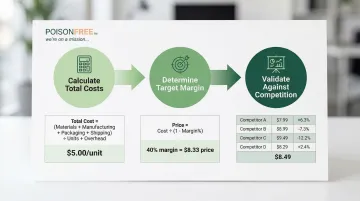
Step 1: Calculate Your Total Costs
Use this framework to capture all costs:
Total Cost Per Unit = [(Raw Materials + Manufacturing + Packaging + Labeling + Shipping to You) ÷ Units Produced] + Overhead Allocation Per Unit
Example calculation for 1,000-unit order:
- Raw materials: $1,200 ($1.20/unit)
- Manufacturing labor: $800 ($0.80/unit)
- Packaging (bottles, caps, labels): $1,500 ($1.50/unit)
- Shipping from manufacturer: $200 ($0.20/unit)
- Overhead allocation: $300 ($0.30/unit)
Total Cost Per Unit: $5.00
Track costs accurately using activity-based costing. This method allocates overhead based on actual activities (setup time, quality inspections, equipment usage) rather than fixed percentages.
The result? More accurate unit costs, especially for small batches.
Step 2: Determine Your Target Margin
Typical private label gross margin targets range from 30-50%, though this varies significantly by category and positioning.
Margin calculation: If your cost is $5.00 per unit and you target a 40% gross margin:
Price = Cost ÷ (1 - Target Margin %) Price = $5.00 ÷ (1 - 0.40) = $5.00 ÷ 0.60 = $8.33
At $8.33 retail price, you earn $3.33 gross profit per unit (40% margin).
Balance margin goals with competitive positioning and volume objectives. Higher margins per unit look appealing, but aggressive pricing that reduces volume significantly can decrease total profit.
Model different scenarios:
- High margin (50%), lower volume: 500 units × $4.00 profit = $2,000
- Moderate margin (35%), higher volume: 1,200 units × $2.50 profit = $3,000
Step 3: Research Competitive Pricing and Adjust Strategically
Once you've determined your cost-based price, validate it against market realities.
Step-by-step process:
- Identify 3-5 comparable products in your category (mix of national brands and private label)
- Document their retail prices across multiple channels (Amazon, retail stores, brand websites)
- Calculate average and range to understand the competitive landscape
- Determine your strategic price gap based on positioning goals
Example competitive analysis:
| Product | Price | Your Price Gap |
|---|---|---|
| National Brand A | $24.99 | -33% at $16.67 |
| National Brand B | $29.99 | -44% at $16.67 |
| Private Label C | $18.99 | -12% at $16.67 |
| Private Label D | $14.99 | +11% at $16.67 |
Average competitive price: $22.24 Your price at $16.67: 25% below average
This positions you as a value alternative to national brands while maintaining premium positioning versus budget private label.
Test different price points with small batches before scaling. This is where manufacturers like Poison-Free Private Label provide strategic advantage with their 500-unit minimum orders.
Testing approach:
- Order 500 units at one price point
- Measure conversion rates and customer feedback
- Adjust pricing for your next 500-unit order
- Validate strategy without committing to 10,000 units at a suboptimal price
Frequently Asked Questions
What is private label pricing?
Private label pricing is setting prices for products manufactured by third parties but sold under your brand. It balances cost structure, competitive positioning, and perceived value. Unlike national brands, you control pricing directly, enabling flexibility to adjust based on market conditions while maintaining profit margins.
What are the 5 C's of pricing?
The 5 C's framework covers: Costs (production and delivery expenses), Customers (willingness to pay and value perception), Competition (pricing of alternatives), Company objectives (profit goals and positioning strategy), and Channels (margin requirements across sales platforms). This comprehensive approach ensures balanced pricing decisions.
How much cheaper should private label be than national brands?
Traditional private labels price 20-40% below national brands. Premium private labels with superior quality or unique benefits (like toxin-free formulations) may price just 5-15% below or at parity. Consumer willingness to pay for quality is rising, particularly in personal care and household products where ingredient safety matters.
Can private label products be priced higher than national brands?
Yes, when you offer demonstrable advantages like toxin-free formulations, specialized ingredients, or ethical sourcing. Health-conscious consumers in niche markets (clean beauty, natural household products) pay premiums for products addressing specific concerns. Success requires justifying higher prices through tangible benefits and authentic storytelling.
How do minimum order quantities affect private label pricing strategy?
Lower MOQs enable pricing flexibility by letting you test price points without massive capital commitments. With 500-unit minimums versus industry-standard 5,000-10,000 units, you can validate pricing, gather market feedback, and adjust for subsequent orders rather than risking large inventory at suboptimal margins.
How often should I review and adjust my private label pricing?
Review quarterly as baseline to track competitor moves, costs, and trends. Increase to monthly during high-inflation periods or after major competitor changes (15%+ adjustments). Immediate review warranted when: competitor prices shift 10%+, raw material costs rise 15%+, or conversion rates drop significantly.
Ready to launch your toxin-free private label products with strategic pricing? Poison-Free Private Label offers 500-unit minimums with volume pricing typically reserved for 10,000+ unit orders, giving you the flexibility to test price points without massive capital commitments. With over 100 toxin-free formulations and FDA cGMP compliance, you get the quality credentials that justify premium pricing. Contact us at customersupport@poisonfree.biz to discuss your private label pricing strategy.